Without clarity, how do you know what you want in dating? In this episode, learn how to clarify your dating wants and needs. — What if you could get clear about what you want in dating? My podcast guest, Tracey Gee, is the author of The Magic of Knowing What You Want. She’s a certified […]
Without clarity, how do you know what you want in dating? In this episode, learn how to clarify your dating wants and needs.
—
What if you could get clear about what you want in dating? My podcast guest, Tracey Gee, is the author of The Magic of Knowing What You Want. She’s a certified leadership coach and consultant and a sought-after speaker and facilitator nationwide. She helps people learn more about themselves and their unique sense of meaning and purpose. She feels honored to have worked with a breadth of incredible individuals and organizations, including UC Berkeley, the Miami Heat, and Coca-Cola, but her great ambition in life remains to pet as many dogs as possible.
In this episode of Last First Date Radio:
How to discover what you want in dating
A practical exercise on uncovering your authentic desires in dating
After you have clarity about what you want, what actions to take
EP 647: Tracey Gee – Getting Clear About What You Want in Dating
What inspired you to write a book on helping others discover what they really want?
I’m trained as a leadership coach and consultant, and the tools I was trained in are wonderful for building self-awareness, but they didn’t cover the next step, which is what you really want. People were confused or ashamed or scared that they didn’t know the answer to that question. Women often struggle with this, as they are always tuned into what other people want.
What are some steps to help you uncover what you want in dating?
Give yourself permission to want what you want. Don’t judge yourself. If you’re a ‘good girl’, you’re not selfish, you focus on others. Don’t wait for permission to be given.
Notice the types of questions that come up when you ask yourself what you want. We can stay in a ‘desire fog’ because we don’t make space to have what we want.
Create room to explore. Try things out.
What is one practical exercise we can use today to help uncover our authentic desires when it comes to dating?
Look back on your life and experiences for how you’re uniquely wired. What worked, and what didn’t work? This will help you understand what you want and need to find the right fit for you. Calibrate to your own inner compass.
When people have clarity in dating, what actions can they take that will lead to what they truly desire?
Do an ‘experiment map’. Explore what dating could look like by meeting people in different ways. Map it out like a mind map. It’s a clear and flexible way to meet someone. Map potential paths, and what you’d need to do to execute that plan. What feels most exciting? Try it!
What are your final words of advice for anyone who wants to go on their last first date?
Ask yourself “How do I want dating to feel when I’m dating?” Be an explorer. Be lighter and more playful. Find your unique joyful way to date.
If you’re feeling stuck in dating and relationships and would like to finally find love, sign up for a complimentary 45-minute love breakthrough session with Sandy https://lastfirstdate.com/application
Ladies, if you think you understand men, think again. My podcast guest, Alison Armstrong shares what brings out the best and worst in men! — Alison Armstrong’s exploration of human behavior began in 1991 with a decision to find out what brings out the best and worst in men. This naturally led to studying women’s […]
Ladies, if you think you understand men, think again. My podcast guest, Alison Armstrong shares what brings out the best and worst in men!
—
Alison Armstrong’s exploration of human behavior began in 1991 with a decision to find out what brings out the best and worst in men. This naturally led to studying women’s behavior and making vital connections between the two. Alison offers practical, partnership-based alternatives to what we’re instinctively compelled to do. She continues to give millions of people access to more fulfilling lives, loving relationships, stronger families and productive organizations.
Communication tools that help men and women connect more deeply
EP 637: Alison Armstrong – What Brings Out the Best and Worst in Men
This conversation was so good, I’m sharing the entire transcript instead of the highlights.
[00:03:19.620] – Sandy
We can talk about a lot of things, but I think that the work that you do, helping women and men understand each other is so crucial. It’s been crucial built in my own life, and it’s been really important to the people that I serve. So first, I want to just get the backstory about what motivated you to study this work and find out what brings out the best and worst in men in particular, which is where you started, right?
[00:03:49.070] – Alison
I have to ask, have you read or listened to the Queens Code?
[00:03:53.450] – Sandy
Yes. That was the first exposure I had to you.
[00:03:57.100] – Alison
That was the first exposure. Okay. So Just because it makes it easier, but for your audience, what happens to Kimberly in that first chapter happened to me. It was my colleague in a seminar, and the leader was talking about relationships, and she raised her hand and launched an attack on men. Why are they wonderful in the beginning? Then turn into these terrible people in the ways that she expressed it. His response to her was to say, Oh, I see. You’re a frog farmer. She tapped her foot and finally said, So what do you mean by that? He said, Some women turn frogs into princes. You, my dear, turn princes into frogs. My life flashed before me. It was February of 1991. I was 30 years old. I was divorced, almost. We were getting divorced. Had a one-and-a-half-year-old son. I thought men were horrible. I thought they didn’t care about what I needed or were actively withholding it, that they couldn’t be trusted, especially a romantic relationship. But the way that I saw my father at the time was very similar. When he said that to her. I was glad. I was glad to find out.
It rang as truth. I was glad to find out that there was something I was doing that was bringing out that worst in men because the alternative was that men were who I thought they were. I so needed them to not be who I thought they were. I wanted to be really married, like a union part got each other’s back, same team, married, not the funny situation I was in. We were barely roommates. I wanted I have a bigger family. That can easily set us on looking for the wonderful man, the exception to the rule, and to find out that maybe it wasn’t the way I thought it was at all. I was ecstatic. I’d been involved in transformation since I was 19 years old, and I knew I could transform myself. I’d been trying to change men, probably since I was 10 years old. With very little success. But I didn’t know where to go because I knew everybody I knew. I was just like my mom. I was just like my friends. I was just like my colleagues. I was just like all the women on television. Then this question popped into my head.
It’s so funny how they pop right here. It might as well be a bubble in a cartoon. The question was, what if men are responding to women? That was the beginning of me finding out if men are responding to women, what are they responding to? And making the correlation between our ways of being and their reaction and our specific behaviors, and their responses. And in the process, also seeing, and this was by observation and then verifying with men, did you do that because of this? Then in the process, also finding out ways that men are not responding to men at all. That it doesn’t matter how much they like you, love you, respect you, admire you, think they need you, want you, crazy about you. They have a saying, A man’s got to do what a man’s got to do. They consider to do other than the right thing because of how they feel is dishonorable. No matter that they love you, they got to do the right thing, which one of the beautiful things about them is if they think they can’t give you what you need, it would be dishonorable to stay with you, be dishonorable to pursue you.
It’d be dishonorable to marry you, even though you’re begging or screaming at them to marry you. It would be dishonorable. No, I can’t give you what you need. That was the beginning. That was the beginning of 1991. I honestly, Sandy, thought it would take 2-3 months to learn everything worth knowing about men because I was sure I would have bet my life on that they were shallow, they had no feelings, so it didn’t matter what I did. I couldn’t hurt their feelings. I questioned whether they had souls. I knew absolutely that they were lesser human beings than women. Absolutely, the world would be a better place if people just did what women said.
[00:09:20.050] – Sandy
So that we’d all live on the planet where Wonder Woman comes from?
[00:09:24.630] – Alison
Well, and depending on which Wonder Woman movie you’re watching, that’s a scary planet, too. Yeah, we’re all blessed and cursed with being human because I just keep digging down and digging down. Now I’m at planetary instincts, male and female, to focused and open, to pack and herd, to wait. These behaviors, you find in the pine tree outside my window and to the bacteria that probably made me sick. All the way, Oh, yeah. This is not higher consciousness. This is survival at its most persistent and ugly. Without awareness of that, we’ll keep doing what we’re compelled to do instead of going, Wait, if I’m compelled to do this, it’s probably going to make it worse.
[00:10:34.680] – Sandy
Yeah. And then so many people are struggling, and they’re lonely, and they’re bitter. I grew up in a home where my father was bipolar. So he had a lot of mental health issues, and it made it very difficult to live with him. So I understand my mother’s frustration, but there was so much emasculation going on. And I didn’t realize the messages I had until much, much later, probably when I read the Queen’s Code. But I married a man who turned out to be very similar to my father, and the frustration, but then staying and staying and staying in a relationship that wasn’t working and thinking, Well, that’s all he’s capable of. There is no better match for me. I had a very narrow view view of what love was, what relationships could be, who men were. So I totally get it. I think that so many people see men, so many women see men as harmful as just so many things that they’re not, but they don’t realize their part in it. And I’m giving a workshop tonight on rejection. So one of the women in the group, I gave them an assignment to look at some past rejections and reflect on them.
She was saying what she learned from her last relationship was become friends with a man first, don’t jump into sex, and basically, protect your heart, so just do all these things, and then you won’t get hurt again. And so what would you say to somebody who learned learn lessons like that from a past relationship where they got involved with somebody and they got rejected?
[00:12:36.140] – Alison
I have so many thoughts. First of all, I’m not sure if technically we can be rejected unless someone says, I reject you. A man may have sorted himself out, which I think is why due diligence is so important. My process of due diligence is Listen very closely. Watch for flags. Watch for heebie-jeebies. Watch for niggling haunt. Then even if you love all the words, Now, watch the action because what’s real is going to show up an action that can’t be manufactured. Is it congruent? Are the words and the actions congruent? When they’re incongruent, get out the microscope. What? Wait a second. But allow for maybe, Maybe I didn’t hear you the way that you meant. How I interpreted when you said this was that you said that you would call me Saturday night, I interpreted it as you would call me Saturday night. So sometime in what qualifies as night, I would receive a call from you, and I didn’t. I need you to call me when you say you’re going to call me, or if you can’t call me when you say you’re going to call me, then at least you send a message saying, I’m sorry, I know I said I would call you, and I can’t.
Acknowledge you didn’t do what you said you were going to do. Can you give me that? But so often we just step over. Or we’re just off with the head. I practice three chances. The first is when I ask for what I need. The second was when I follow up and say, I really meant it. The third is, do you want one more chance? Because this is a deal breaker. The fourth is, you didn’t. We’re not going to try to do this. First, the clarity about your boundaries, what you will live with and not live with, what you won’t live without, however you want to say, deal breakers, boundaries, ultimatums, the clarity about that. Then the muscle, practicing, treat every interaction like a workout, no matter how cute he is. Do you speak your truth? No matter how rich he is, do you speak your truth? I call it early and often. Tell someone the truth before you care too much about what they think of it, whatever it is. If they go, Oh, I’m not your person, then say, Thank you. Thanks for telling the truth about that. Because if you’re not my person, then I’m not your person.
That’s the thing I think people miss. They think the one got away. Well, if there was such a thing as the one, how could they have gotten away? How could you… I blew it with the one. Well, if they were the one, how could you blow it? You might have done something and how you behaved, but then how they interact with you about it worked and you were better off for it. I Yeah. I was called terminally honest, and I know I’m annoyingly logical. The reason why I’m saying it, because I really am responding to what you asked, is guard your heart. Guard your heart as a strategy that you might as well have something on your chest. You might as well walk around with a deflector on your chest because everybody can tell, because there’s no love emanating, there’s no receptivity available, which is the fourth most attractive quality in a woman and when men cannot live without. And so what I found, and I had to rediscover this after my husband died five and a half years ago, was what if If A, my heart can’t be broken. What if it can be bruised, battered, squished?
But what if… I won’t say I’m heartbroken. I won’t. I’ll say I’m heart sick, maybe. But what if it can’t be broken? Then what if we know what our boundaries are and we’re loyal to what we need, and we know the moment the boundary needs to come up, and I just discovered this since I was made single, that the more I’ve demonstrated to myself that I’m loyal to my boundaries and that I can instantaneously set and defend them if necessary, now I’m truly receptive. I am not on guard. I’m not on guard because I know if necessary, there are spikes that will come out of the floor instantaneously. I must that. I developed that strength through natural horsemanship, and then singlehood after Greg died. It took a while to build the muscle. We squint. No, this is fine. This is fine. But the more we, eyes wide open, and what I was sharing with you earlier, seeing, Oh, I was squinting. Oh, I so wanted that to be what I wanted it to be, and I was squinting and overlooking and thinking, I’ll deal with that later. All right, that’s on me. Walking around the world open-hearted to every human being, that’s policy.
But it’s not idealistic. It’s trusting myself. I don’t have to trust in the goodness of everybody else. I trust myself. Even when I’m slow in the uptake sometimes because it’s quinting, I return to the trust in myself. There was something, so you said, Guard your heart. Oh, sex is not the problem. And how soon you have sex is not the problem. Number one question on our understanding sex and intimacy panel, the women would ask is when is too soon to have sex for the first time still end up with a commitment, which we think that they’re locked together, right? Yeah. And that is ancient. That is the virgin bride. Protect the virginity of your daughters or no one will marry them. And then you won’t get the dowry or whatever. This won’t work out. They’re going to save the whole family. So protect the virginity. It’s instinctual to withhold sex and be strategic about it. But it’s actually before and after that has us have sex at what could be too soon. One is the effects of sexual chemistry, what I would call too much chemistry, which makes both men and women stupid and reckless.
Procreate is the number one instinct. It trumps protect. We all risk our lives to have sex. We risk our lives, our lifestyles, our Our health, our emotions. It’s what’s driving the sex. My husband was not my type, and I didn’t actually become physically attracted to him until a few months into dating. But we’d had sex, and they’re like, How could you have sex? I’m like, It’s called affection? It’s called a great affection for him. It wasn’t driven by, I got to have you. People think I’m against chemistry. No, chemistry is wonderful. Just last year, I did looking for chemistry and connection because we can cause both. We can choose to have extraordinary chemistry. We can choose to have extraordinary connection. They’re not out of our power. It’s what got you in debate that usually is what causes the trouble. If it’s crazy chemistry that gets you in debate, you’re already cuckoo. You’re already not doing due diligence. You’re already not looking for the long term compatibility that you say you want. Then the effects, depending on how old we are, how much estrogen we have, affects how much oxytocin, any… Let’s see. The written word will cause a release of oxytocin in a woman’s phone.
This is why I tell them to get out of the messaging zone, A-S-A-P. You want to get on the phone, besides which a woman’s voice has the biggest impact on a man. So get on the phone. Then the second thing is it’s the bonding hormone. So especially if we’re still fertile, instinct will tell us to follow that man around until we find out for sure we’re not pregnant. Okay. And then our period starts and we’re like, Like, Eew, I don’t even like that guy. What happened to me? I’ve been in a fog. Yeah, an oxytocin, bonding fog, instinctual. Got together, two different tribes in the full moon, followed him home She was pregnant, got to their house and went, Oh, this is gross. So sex is not the bad guy, and how soon we have sex is not the bad guy. I do, however, think if you can’t talk about sex before you have it, don’t have it. You don’t trust them enough to talk about it. You don’t have enough of your senses and your clarity and understand what you need to talk about it. Talk about it. Frankly, with my sweetheart, love, supporter, now housemate, after three years of living in his backyard, I moved into his house.
We had sex within hours of meeting each other in person for the first time as we planned. It was not accidental. It was planned. But we’d had hours of getting to know each other and even resolving conflicts and doing the erotic blueprints and sharing the results and even questioning, wait, for you to get that result, you would have had to say yes to this category And there’s some things in that category I don’t do. So which ones are you looking for?
[00:24:04.210] – Sandy
I love that. Yes.
[00:24:07.920] – Alison
If you… Yeah, talk about it.
[00:24:11.190] – Sandy
Talk about it. Everything.
[00:24:13.650] – Alison
Well, especially if you know I knew so many men in my age group, right? So I was 58 when I was widowed, and they’re already men in my age group and older. My husband was 11 years older, so I was open to that age group. But so many of them have had an incident of ED, of erectile dysfunction. So many women don’t understand how that old business works as we get older and that they’re not going to be a teenage pop-up. Anything happens, boing, boing, boing. No, there’s no volunteer. I call it the Erection Partnership. I swore it for sex in the first conversation because too many men in my age group had signed off sex because they’d had an incident where they couldn’t perform and they were humiliated. They lost so badly. They were, I’m looking for affection. I’m looking for companionship. I’m looking for enjoyment. We’ll hold each other, but no. They don’t often reveal that before three months into it, and you wonder, why do we still have our clothes on all the time? Or why do we only do these certain things, but nothing else? They don’t reveal it. I pursued that conversation in a way that I was practicing just being safe.
I could be safe because I hadn’t hitched my wagon to this person yet. I hadn’t decided they were the one. I wasn’t protecting anything. If they couldn’t accept things like, My dead husband is still very much part of my life, and he probably picked you. I told Dan that in the first five minutes of our conversation and waited to see and thought in my head, if you’re going to run, run now. And there’s about a half hour, he didn’t run. He was quiet, and I thought he was going to run. And then he said, I can feel him. Nice. Yes, that’s what I thought. Oh, wow. He did still work because my husband is still providing for my family and my friends. He’s a very busy, disincorporated person. But if someone can’t be with that, it wasn’t going to go away. It wasn’t going to change me or change him. What’s unchangeable about you? Or what do you think someone’s going to break up with you over? What have People have broken up with you over? And you know you’re still that person. How about bring it up? And if they’re going to run, run now instead of after you’re in love and bought a house together and have three children, and now they break up with you for the reason that you’re afraid of in the first place that you’d concealed all those years.
So it was within a half an hour, we were talking about sex. Okay, so sex is something you’re looking for? Yeah. Nice.
[00:27:30.560] – Sandy
Nice.
[00:27:31.510] – Alison
Good. Great. We didn’t go more into that one at the time. It’s confirming we’re monogamous people. We have a monogamous lean. We’re committed to the monogamy thing. Okay, good. All right. But it’s just… Yeah, so that thing, the strategy, so much of our… I mean, we have to make conclusions so that we can make strategies, and then our minds search for what validates the strategy, and We can miss the truth. We can miss the truth of the person in front of us.
[00:28:05.090] – Sandy
Yes, for sure. That was a great answer too. I mean, people have faulty thinking, and they take their experiences and they interpret them in a way that keeps them safe, but it doesn’t bring them connection and love. And the funny thing is that when I started my career- I just fell in love with you all over again. Oh, Allison.
[00:28:32.100] – Alison
Yes. They interpret things in a way that makes them feel safe or that they can make themselves safe. But it doesn’t produce the result.
[00:28:42.260] – Sandy
No, it just puts a wall around you. And I got it.
[00:28:45.750] – Alison
Bravo, Sandy.
[00:28:48.000] – Sandy
Before I even understood all of this, I came up with an analogy that I used in my TEDx Talk, which was in 2013. I had just started my career, And this came to me that I had dated a guy who told me that he was like a Tootsie pop, that he was hard on the outside and soft and bushy on the inside. And I had this epiphany that I was that Tootsie Pup. And so it’s like the frog farmer. I was that really tough exterior person because I didn’t really know myself. I didn’t have the boundaries. I didn’t have communication skills. I didn’t have my core values I didn’t know any of that. And so the conclusion I had after every heartbreak was, get tougher. Be that Teflon shield that will make sure that I won’t get hurt. And that’s how I chose my husband. I chose a man who chose me, who loved me, who said he was going to keep me safe, and who was obsessed with me. I was not obsessed with him. I had a lot of questions, but I truly thought he would keep me safe, and that is not what happened.
So the whole analogy of the Tootsie pop was like, Oh, I need to be a different candy bar. So I came up with the heat bar, which is tough on the inside and soft and yielding on the outside.
[00:30:21.440] – Alison
That’s true. Sweet chocolate covering. Yeah. And then the carmely sweetness and then Yeah.
[00:30:35.830] – Sandy
Right. And so when I realized that I had to get really clear, like you said, then you can guard what’s important to you by speaking up early and not letting yourself have that squinty eye look at the person in front of you just because they’re really good-looking and hot and they chose you and maybe they’re younger. And for whatever reason, we end up in bed with these people who then are completely incompatible with us, not having these discussions, not calling people out on their behavior and saying, When you said you were going to call me. I mean, I see this. This is like what’s killing so many people’s lives is accepting crappy behavior, not speaking up, saying they’re confused by the behavior of this person, but never saying it’s not okay This is not working for me. Let’s talk about aging. We just have a few minutes left, but most of my audience is older. You talked about ED before. Are there any other changes that happen as people age that changes how men and women relate to each other?
[00:31:51.630] – Alison
Oh, my gosh. Just a small question.
[00:31:54.780] – Sandy
Just a small question.
[00:31:56.860] – Alison
Okay. Here’s a small answer. The way that estrogen and testosterone configures the brain. Testosterone creates compartmentalization, single focus, and limited number of connections between their verbal centers and everything else. Estrogen creates no compartments, creates diffused awareness, right? Pores in every direction. Perfect, perfect perception for a gatherer who has to wander out in a meadow and simultaneously be scanning for danger while finding anything useful, medicinal, edible, or that will be edible in the future, and how soon do I need to come back and get it before the bears? And and that basically every part of the brain is connected to the verbal centers of the brain. Imagine if we’re like that from day 21 of gestation, when the hormones kick in until we get into our… It’s going to vary, right? But into our 50s, It’s happening in the ’50s, definitely has happened in the ’60s, where the testosterone in men, it has naturally fallen off unless they’re doing bioidenticals, which is a whole other story. The verbal centers are getting set up. The compartmentalization, the walls are coming down. The verbal centers are getting connected to other parts. They can talk about their feelings, their emotions.
Their knowledge pours out of them, sometimes in a really annoying in a way in unsolicited advice that they seem to not be able to not give. Yes, and they start paying attention to connection, and they don’t want to have sex if we’re not in love, if their heart’s not in dear. This is not a performance. Then women, our estrogen has disappeared with the ovum as they dissolved and we have none left. The half of our testosterone that we depended upon from the ovum, that’s gone, too. Now we only have the testosterone from our adrenal glands and the estrogen, little bits of estrogen that our bodies can make or that we might ingest things that support it. I’m I’m not knowledgeable in that, but I know people are. The estrogen is stored in the fat deposits of our body, but in cultures where the idea is to be as skinny as you possibly can, you’re not going to be able to hang on to your estrogen, so your skin is going to get papery and fluids are going to dry up and you’ll be a skinny raisin. Eat fat, lots of good healthy fat, have some cheeks on you.
If someone doesn’t love your curves, that’s their problem because they’re your curves. If you want to know if your body type appeals to somebody, honestly, just take your body type and add the word porn on it and search on Google, and you will find out people pay to look at body curves. Every type of body. Every type of… Men cannot decide what their body type is. They don’t get to choose. It just is what it is. And if they’re made fun of it, they’re made fun of it. But somebody loves you just the way you are. I have a friend who, as her brand new husband, left for deployment, put his arms around her, grabbed a hold of her rear end and said, This could be bigger when I get back. Yeah,. Oh, yeah. So these things are swapping. So as we get older, now the brain configurations We’re swapping and we become more focused. Our children may think we’re ignoring them like my youngest did. I was 36 when she was born and she thought I was ignoring her. No, baby. It’s single focus. I have become I was just making dinner. We have to watch.
We have to watch because even when you get it wired, then we change. I guess just to keep us on our toes, Sandy, nobody gets to see it late. Sexuality changes. Often, I couldn’t wait to be 60 years old because I had so many students in their 60s, and my observation was, Oh, my gosh, they’re unstoppable. I want to be that. I so wanted to be that. I can’t wait to be that. It’s true. I got into a big kerfuffle with Dan about one of my deal breakers. As we got it sorted out, what’s the plan and what’s going to happen, and what’s he going to be accountable for, I said, I love you. He I said, I love you, too. I looked at him and I said, But you don’t like me right now. He wanted to say something different, but he goes, Truth is my second-highest value. So he said, No, I don’t. I checked. I scanned all the way down, all the way up. I was totally fine with that. As a younger woman with a lot of estrogen, that would cause a panic attack. He doesn’t like me. I’m going to die.
If the bear shows up and we have bears, he’s not going to protect me. I’m all right with that. Oh, my gosh. This is hot. And it’s what has older women be so attractive to men, the self-confidence, the directness. They say the courage to be authentic. It takes less and less courage to be authentic. Why would I be anything but authentic? That’s a waste of time. For women who get older and think this means you’re less beautiful, less attractive, less desirable, the thinking of that will make that true. But it’s not inherently true.
[00:38:45.800] – Sandy
I love that. I agree with you. And that is a wonderful way to end our conversation today. We could have gone on for 10 more hours. I just love talking to you. I think you’re so full of wisdom. And I think it’s so important for women and men to pay attention to the work you do because we get it wrong so often and we can get it right. We can have more love, more connection, and more positive relationships if we just learn to get out of our own way and learn the skills that it takes, really, because so much as the mindset and what we are faulty thinking has gotten in the way of healthy relationships. So thank you for the work you do.
[00:39:34.950] – Alison
You’re welcome. And thank you for seeing me. It means a lot.
If you’re feeling stuck in dating and relationships and would like to finally find love, sign up for a complimentary 45-minute love breakthrough session with Sandy https://lastfirstdate.com/application
Learn practical steps to develop secure attachment. Discover how to calm triggers, express needs, and choose healthier relationships. — If you’ve spent decades navigating relationships—marriages, partnerships, dating, or even long stretches of independence—you may have noticed certain patterns in how you connect. Maybe you get anxious when someone pulls away, or you shut down when […]
Learn practical steps to develop secure attachment. Discover how to calm triggers, express needs, and choose healthier relationships.
—
If you’ve spent decades navigating relationships—marriages, partnerships, dating, or even long stretches of independence—you may have noticed certain patterns in how you connect. Maybe you get anxious when someone pulls away, or you shut down when things feel too close. These patterns aren’t about “what’s wrong with you”. They’re about attachment styles.
The good news? Attachment style isn’t fixed. Even in midlife and beyond, you can slowly, gently rewire yourself toward secure attachment. It’s not a light switch. It’s a process. And it begins with how you relate to yourself. Here are five steps to develop secure attachment.
How to Develop Secure Attachment and Build Deeper Connections
1. Notice Your Triggers With Compassion
Pay attention to your body’s signals when you feel unsettled. Maybe your chest tightens when a call doesn’t come, or you panic when someone wants too much closeness. Instead of labeling yourself as “too much” or “too distant,” simply pause and name what you’re feeling in your body:
“I’m activated. My nervous system thinks I’m unsafe.”
That gentle recognition takes you out of autopilot and into awareness, which is a big step toward secure attachment.
2. Learn to Calm Your Own Storms
Being securely attached doesn’t mean you never get rattled. It means you’ve built tools to steady yourself when you do. Breathing deeply, journaling, grounding with nature, stretching, or moving your body—these practices re-teach your system that intensity doesn’t have to equal danger.
Every time you self-soothe, you reinforce safety inside yourself.
3. Dare to Voice Your Needs
For many women, especially over 50, the idea of “needing too much” has been ingrained. But securely attached people aren’t afraid to be honest. Say things like:
“I miss you.” or
“I need a little space right now.”
These small truths open the door to deeper trust. The right people won’t reject you for them—they’ll appreciate your honesty.
4. Choose Steady People, Not Rollercoasters
You can’t create security with someone who thrives on inconsistency. True safety grows in relationships where people keep showing up—not just for the fun moments but also for the hard ones.
If someone leaves you spinning in uncertainty, that’s your signal: don’t chase stability where it doesn’t exist. Plant yourself in relationships that feel solid, not shaky.
5. Focus on Repair, Not Perfection
Conflict is inevitable. What matters is how you reconnect after. Instead of expecting perfection, practice repair with phrases like:
“I got defensive. Can we start over?” or
“That stung, and I want to work it out with you.”
Each repair is a step toward building trust. Over time, these small moments create the foundation of real security.
Becoming securely attached in midlife is about re-parenting yourself while choosing relationships that feel steady. It’s about teaching your body, over and over again, that closeness can be safe and distance doesn’t mean abandonment.
With time, calm replaces chaos, trust replaces fear, and love becomes less about survival—and more about the joy of going on your last first date.
If you’re feeling stuck in dating and relationships and would like to finally find love, sign up for a complimentary 45-minute love breakthrough session with me and explore how private coaching can help! https://lastfirstdate.com/application
How do you rewrite your love story to choose a healthy partner this time around? Spoiler alert: heal your trauma! — How can you rewrite your love story so you end up in a healthy relationship? Owen Smithyman works with self-aware people who have done significant work on themselves – talk therapy, somatic work, plant […]
How do you rewrite your love story to choose a healthy partner this time around? Spoiler alert: heal your trauma!
—
How can you rewrite your love story so you end up in a healthy relationship? Owen Smithyman works with self-aware people who have done significant work on themselves – talk therapy, somatic work, plant medicine, coaching — and still feel something running in the background, making decisions for them or making life difficult. As a Peak States Therapy Practitioner, he helps clients resolve emotional wounds permanently, relate more authentically, and live a more vibrant life.
In this episode:
How past trauma shapes our choices in dating and relationships
The relationship between beliefs and trauma
What are peak states, and how are they relevant in dating?
EP 728: Owen Smithyman – Rewriting Your Love Story: From Old Wounds to Healthy Choices
Highlights of this episode:
Why people get stuck in healing
Cognitive/verbal work often creates strategies but not deep resolution; symptoms keep returning (analogy: repeatedly pumping a tire with a slow leak).
Awareness/insight alone frequently isn’t enough to change unconscious bodily associations or attachment patterns.
Some issues are subtle or multigenerational (epigenetic/generational trauma) and increase fragility to stress.
People sometimes unconsciously recreate familiar trauma (diathesis-stress model) or avoid happiness because chaos feels familiar and “safe.”
Trauma patterns in dating & relationships
Family-of-origin dynamics often replay in adult relationships (e.g., attracting overbearing partners when a parent was overbearing).
Associational trauma and projection: unconscious associations make people feel familiar/safe with unhealthy dynamics; projections make partners seem to possess traits that actually originate in the observer.
Common behaviors driven by trauma: provoking untrustworthiness, seeking drama for dopamine, attempting to “fix” partners, and expecting others to fill unmet internal needs.
Rewiring attachment and attraction is possible by resolving the underlying bodily trauma rather than only applying cognitive strategies.
Therapies, methods & practical steps
Somatic-focused approaches (e.g., EMDR, NARM, EFT, Peak States Therapy) target trauma in the body and use nervous-system modifiers (bilateral stimulation, tapping, regression) to allow safe discharge and integration.
Peak States Therapy: described as a toolbox-oriented somatic method attractive to both analytical and experiential minds; useful for complex or generational trauma, projections, and attachment patterns.
Simple in-session practice: say a limiting belief aloud → notice the emotion → scan the body to locate the trauma sensation → apply an appropriate somatic trauma process.
Practical self-care steps: prioritize bodily care (sleep, movement, nutrition) to reduce baseline distress and clarify relationship issues.
Try multiple modalities and practitioners to find what truly resolves the stuck patterns.
Free Gifts:A 5-minute guided somatic process to eliminate resistance to change, to make self-care, diet, exercise, and engaging in the dating scene easier and a 30-minute guided, self-paced healing process to resolve fears around dating, relationships, or self-worth https://gift.optimize-consciousness.com/
Please subscribe/rate and review the podcast here.
If you’re feeling stuck in dating and relationships and would like to finally find love, apply for a complimentary 30-minute love breakthrough session with Sandy https://lastfirstdate.com/application
What are the hidden costs of trauma? My podcast guest, Dr. Kirsten Harrison, shares the powerful story of a woman who overcame severe trauma. — Dr. Kirsten Viola Harrison is a trauma psychologist, author, and founder of Soul Wise Solutions. For over 35 years, she has guided individuals through profound psychological and spiritual transitions, including […]
What are the hidden costs of trauma? My podcast guest, Dr. Kirsten Harrison, shares the powerful story of a woman who overcame severe trauma.
—
Dr. Kirsten Viola Harrison is a trauma psychologist, author, and founder of Soul Wise Solutions. For over 35 years, she has guided individuals through profound psychological and spiritual transitions, including C-PTSD, schizophrenia, and near-death experiences. She is the co-author of “I, Sean/a: The Story of a Homeless Intersex Woman Who Inspired a Community”, the remarkable true story of Sean/a Smith, an intersex woman living with schizophrenia, whose life challenges stigma and who inspires a movement toward dignity, inclusion, and soul-deep healing.
In this episode of Last First Date Radio:
The hidden costs of trauma
Hope for those who are struggling with any type trauma
Great advice for those who are dating after any kind of traumatic relationship
EP 685: Dr. Kirsten Viola Harrison – The Hidden Costs of Trauma
What inspired you to pursue a career in trauma psychology?
I always was interested in trauma and asked my professors to teach more about it. I’m so happy it’s grown and blossomed. Trauma has an effect on everything we do. There are many gifts in overcoming trauma.
For anyone listening who might be struggling with their own trauma, what would you say to offer hope or encouragement?
Keep track of the micro steps. Appreciate all the little steps. Take what you’re given in childhood, and use it to grow. Rewrite your story. If your worth is tied up in how much you can help someone, this is a trauma response. It illuminates that you can be a helper AND have balance in your life instead of having an energy drain. Traumas rework themselves over time. Shift to making your self-knowledge a priority. What do you want to accomplish in your lifetime? Be more strategic about it.
Your book “I, Sean/a” explores homelessness, intersex identity, schizophrenia, and spirituality. Tell us a little about the story and what you want readers to take away.
My ex-husband was an international tennis pro. We moved to La Jolla and he noticed Sean who hung out at the courts. One day, Sean became Seana with a blonde wig. I sparked a conversation and eventually found out she was homeless. She was outside freezing, and I asked if she had shelter. I had no idea she was unhoused. I checked her into a hotel and contacted the newspaper to have them write about this beloved person. We ran a go fund me, got her off the street, and it became apparent that we needed a next step. I wanted to write her story with her, and she said yes. That turned into a ten year endeavor.
I want people to understand resilience, post traumatic growth, and what to do when you feel hopeless and don’t belong. Don’t give up. You never know what’s going to happen around the corner. Be unapologetically yourself. Stop worrying about what people think.
What are your final words of advice for anyone who wants to go on their last first date?
Stay open and curious. Expand your field of awareness. We all have something to teach each other. Ask yourself what you need to expand your own journey. See the other person’s wholeness and beauty. It takes some of the pressure away from finding your person. If you follow this path, at some point, you’ll meet the right person.
If you’re feeling stuck in dating and relationships and would like to finally find love, sign up for a complimentary 45-minute love breakthrough session with Sandy https://lastfirstdate.com/application
What are some communication patterns that make or break a relationship? Tune in to this episode with Julie Nise to learn more. — Let’s talk about communication patterns that make or break a relationship. My podcast guest, Julie Nise, is a Relationship Trainer and Communication Strategist known for her direct, results-oriented approach. She has helped […]
What are some communication patterns that make or break a relationship? Tune in to this episode with Julie Nise to learn more.
—
Let’s talk about communication patterns that make or break a relationship. My podcast guest, Julie Nise, is a Relationship Trainer and Communication Strategist known for her direct, results-oriented approach. She has helped over 8,000 individuals and couples through challenges in communication, trust, and leadership. She has appeared on the Dr. Phil Show multiple times, and she’s a regular commentator on NewsRadio KTRH in Houston.
In this episode of Last First Date Radio:
Common communication mistakes couples make
How to strengthen your relationships
How relationship coaching differs from therapy
EP 690: Julie Nise – Communication Patterns That Destroy or Create Connection
What are some of the most common communication mistakes you see couples make, and how can they fix them?
Women and men don’t understand each other. Expectations need to change with couples. We need to learn each other’s communication styles and develop an appreciation for each other’s way of communicating.
Men generally communicate around tasks (watching a game, bowling, doing an activity). Women tend to just talk in general. Men should not assume women want them to fix things. Women should not assume men want to hear long stories. State at the outset what you want from each other.
Sorting by distinction and sorting by agreement. Women tend to sort by disagreement first. Men tend to agree first. For women who do that, leave the “yeah buts” at the door. Start with agreement.
Also, there is a pattern of being internal vs external. Come outside your head and notice what’s going on in front of you. Our perceptions are usually widely off. Be lovingly curious.
How does your approach to relationship coaching differ from traditional therapy?
I am outcome oriented. I deal with the present and future to achieve outcomes. I do relationship training to train skills to improve relationships and communication.
What’s one thing people can do today to strengthen their most important relationships?
Be very curious about what your partner says without judgment. Be a good audience. People often miss the point. Be less concerned that your partner is going to leave and more concerned about hurting your partner. Do everything you can to heal your own traumas.
What are your final words of advice for anyone who wants to go on their last first date?
The most important relationship is the one you have with yourself. Strive for self-acceptance, calm, flexibility. There will be challenges in relationships. And the more you know yourself, the more you’ll have healthier relationships.
If you’re feeling stuck in dating and relationships and would like to finally find love, sign up for a complimentary 45-minute love breakthrough session with Sandy https://lastfirstdate.com/application
Julie Krafchick and Yue Xu believe everyone is dateable. If you’re struggling with modern dating, you must listen to this episode! — Want to know how to be more dateable? Julie Krafchick & Yue Xu are active daters turned dating insiders, and top influential voices of modern dating, relationships, and connection in the digital world. […]
Julie Krafchick and Yue Xu believe everyone is dateable. If you’re struggling with modern dating, you must listen to this episode!
—
Want to know how to be more dateable? Julie Krafchick & Yue Xu are active daters turned dating insiders, and top influential voices of modern dating, relationships, and connection in the digital world. They’re the authors of How To Be Dateable and the co-hosts of the hit podcast Dateable, which has been named one of the top podcasts about modern dating and relationships by the New York Times, The Huffington Post, Oprah Daily, and more.
In this episode of Last First Date Radio:
What is “dating on your own terms”?
What the four dating archetypes represent: Achiever, Dreamer, Energizer, Maverick, and Thinker
Some of the traps that get in the way of finding your person
One of their favorite exercises from the book
Some of the key points they’re hoping readers will take away from the book
EP 645: Julie Krafchick and Yue Xu – How to Be More Dateable
How is your book different from other dating books out there?
We needed to let people know we don’t need to stay in the confines of modern dating. We hope it empowers people to date on their own terms. There’s so much negativity that doesn’t bring us to connection. There is a better way to date.
Tell us about the four dating archetypes that help you become more dateable.
Achiever: Go after what they want, achieve a lot. Downside is they’re not always present. They want to keep things going to get to the next stage.
Dreamer: Wears their heart on their sleeve, they make great partners because they’re so warm. Where it doesn’t serve is getting lost in the fantasy by seeing the best in them and giving too many chances.
Energizer: Go, go, go daters. Back to back dates. Endless energy on dates. Downside is they don’t take time to pause and reflect on what works for them. All their energy is out, not in. They get drained.
Maverick: Very independent, high standards for self and others, hold your own in relationship, but runs at first sign of something hard to not get hurt. Needs to learn to run towards the person by getting curious and getting information instead of misinterpreting.
Thinker: They overthink, hesitate, are all in their head. They are people who think things through and are open to conversation. Downside is they go into analysis paralysis. They can lose track of the big picture.
What are some of the traps that get in the way of finding your person?
We believe everyone is dateable. What gets in our way is the traps of the modern dating culture.
The Expectation of Love on Demand: We are in a fast culture. Uber, Amazon, Ubereats are all immediate. We often date like that, looking for an immediate spark.
Settling Paradox: This is where you don’t want to settle for the wrong person, but you settle for bad behavior.
Validation Trap: Because of the mentality that you’re winning if you’re in a relationship and losing if you’re single put so much pressure on dating. We seek validation, but we’re not always aware of that.
Relationship Chicken: We do everything in dating that’s the opposite of what we do in a relationship. Fox example, we play games with texting and waiting longer than the other. How can we treat dating as we would treat someone in a relationship.
What are your final words of advice for anyone who wants to go on their last first date?
Don’t think about dates as first date. Anything can happen in life. Life doesn’t happen in a linear fashion. Bring your best self to every first date, and treat your relationship as a series of first dates. Be yourself, not a ‘date persona’. That’s when the right people come to fruition.
If you’re feeling stuck in dating and relationships and would like to finally find love, sign up for a complimentary 45-minute love breakthrough session with Sandy https://lastfirstdate.com/application
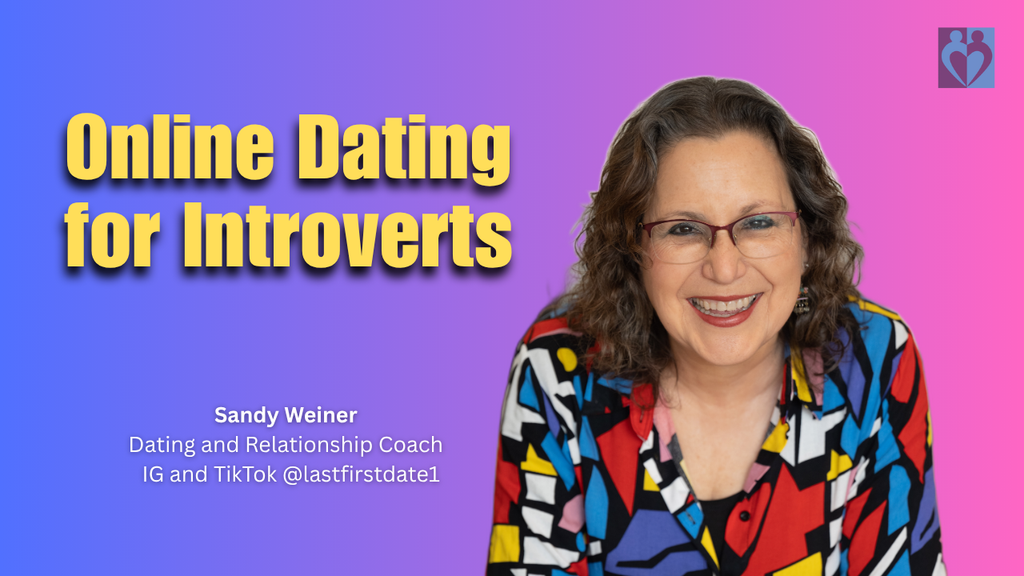
Four gentle strategies for introverts to help you enjoy online dating at your own pace, including how to recharge after dates and turn small talk into real conversation. If you recharge in quiet moments and feel most like yourself in calm settings, you might be reluctant to date online. Online dating can be the perfect […]
Four gentle strategies for introverts to help you enjoy online dating at your own pace, including how to recharge after dates and turn small talk into real conversation.
If you recharge in quiet moments and feel most like yourself in calm settings, you might be reluctant to date online. Online dating can be the perfect way for you to meet someone. A little advanced preparation will make it more enjoyable. I’m sharing how to make online dating work if you’re an introvert.
Online Dating for Introverts
If you have ever closed a dating app feeling more tired than when you opened it, you’re in good company. Online dating is actually a natural fit for introverts, and it offers real advantages. It also has a few features that can drain your energy.
While many introverts prefer to reveal themselves gradually as trust builds, writing a dating profile asks you to talk about yourself in a way that can feel uncomfortable. Messaging several people at once means starting many conversations with strangers, and every new message takes energy, especially if you dislike small talk. Phone calls and first dates can feel awkward.
Introverts often shine most brightly after they get to know someone better, when their humor, warmth, and thoughtfulness have room to show up. The pace of online dating can move faster than that. The good news is that each of these challenges has an easy solution.
Online Dating Can Actually Be a Good Fit for Introverts
Research suggests introverts tend to have fewer romantic relationships than extraverts. That’s because introverts usually take more time to build meaningful connections, and the places where many people meet, like parties, bars, and crowded events, can feel overwhelming to them. Imagine trying to get to know someone while shouting over loud music. Many introverts would happily skip that scene and stay home.
Online dating offers a manageable setting for introverts, where you can browse profiles from your favorite chair with a cup of tea beside you. You can take as much time as you like to write a thoughtful message, which is great for those of us who like to think and process before we speak or write.
What Introversion Really Means
Susan Cain, author of Quiet: The Power of Introverts in a World That Can’t Stop Talking, describes introversion as a preference for environments with less stimulation. They’re not necessarily shy. Shyness relates to fear of social judgment. But many introverts are quite confident and enjoy being with people. They do their best work in meaningful conversations and in calmer settings.
A big distinction is how they recharge. Extraverts recharge in lively, stimulating environments. Introverts recharge in quiet. That is why a first date, even a lovely one, can leave an introvert feeling drained afterward. Self-care becomes an important part of your dating plan.
Four Tips for Introverts Who Are Dating Online
1. Manage your time so your energy lasts.
Endless swiping and messaging can wear anyone out. Set a daily or weekly window for dating activity, maximum of twenty minutes a day, and close the app when the time is up. Choose a manageable number of conversations at once so each person receives your full attention. Some people find it helpful to pick two or three days a week for dating and keep the other days for their own interests and friendships. A steady rhythm helps you stay curious and warm instead of overwhelmed and drained.
2. Recharge after phone calls and dates.
Build downtime into your schedule the way you would build in a warm-up before exercise. If you have a date on Saturday afternoon, keep Saturday evening open for something restorative, like a walk, a bath, a good book, or a quiet dinner at home. Give each day its own single social event, so a phone call, a date, and a social gathering each get a day to themselves. After a date, give yourself time to notice how you feel before deciding what comes next. Debrief your dates using my debrief method.
After every date find:
3 things you liked about him
2 things you didn’t like (yellow or red flags)
3 things you thought you did well
2 things you’ll do differently on the next date
You will often get a much clearer read on the connection once you’ve had a chance to rest.
3. Let your personality show early.
Introverts often keep their inner world private, and it can take several dates for a person to get to know them. Unfortunately, in dating, people make quick judgments about who you are, so consider revealing a bit more on a first or second date. Share a story from your week, mention what lights you up, and let your humor come through. On your profile, include specific details about what you love, such as your garden, your favorite mystery author, or the trip you still dream about. Specifics give people something to respond to, and they help the right person recognize you. On the first few dates, try sharing one layer more than feels comfortable. Your depth is one of your greatest gifts, and the right person will be delighted by it.
4. Turn small talk into meaningful conversation.
Many introverts find small talk tiring because they crave depth. But small talk can actually become the doorway to depth. Start with an easy topic, then follow it with a question that invites a story. If someone mentions they love to travel, ask about the place that surprised them most. If they mention their work, ask what they enjoy about it or what they would do instead if money and time were not an issue. Questions that begin with “what” and “how” tend to open richer conversations than yes-or-no questions. Preparing a few favorite questions ahead of time can help you feel relaxed and ready. Listening deeply, which introverts do so well, makes you a memorable date.
Your Turn
If you’re an introvert, I would love to hear about your biggest challenges in dating. What are your takeaways from this article? Share them in the comments below.
And remember: it’s never too late to go on your last first date.
If you’re struggling with online dating and want to save yourself from heartache and frustration, join the Find Love Online After 40 course! Register now and be one of the first five to get an extra bonus valued at $300 – a private laser session with me! https://lastfirstdate.com/find-love-online/
If you’re feeling stuck in dating and relationships and would like to find your last first date, sign up for a complimentary 1/2 hour breakthrough session with me https://lastfirstdate.com/application
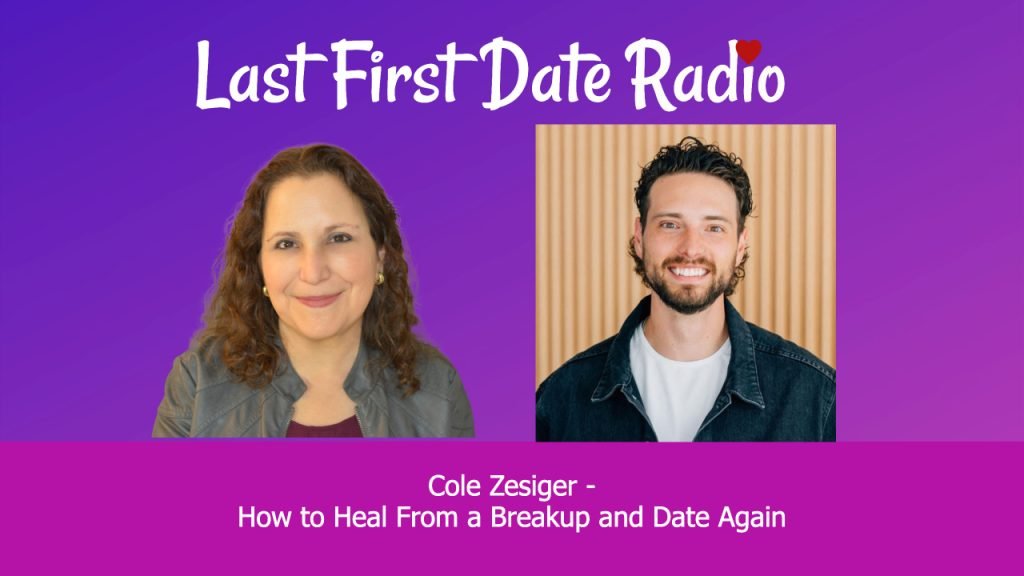
How do you heal from a breakup and when do you begin to date again? Learn about breakup recovery on the podcast with breakup coach, Cole Zesiger. — Cole Zesiger is a breakup and relationship coach specializing in breakup recovery, dating advice, and relationship coaching. After a divorce at 23 and another breakup soon after, […]
How do you heal from a breakup and when do you begin to date again? Learn about breakup recovery on the podcast with breakup coach, Cole Zesiger.
—
Cole Zesiger is a breakup and relationship coach specializing in breakup recovery, dating advice, and relationship coaching. After a divorce at 23 and another breakup soon after, he began sharing his journey on social media—growing to over 750,000 followers across Instagram, TikTok, YouTube, and more. He has coached 2,000+ people through heartbreak, helping them either rekindle relationships in a healthy way or move on with peace. His practical approach blends psychology, attachment theory, and real-world strategies to guide people from heartbreak to healing. When not coaching, Cole enjoys time with his wife and daughter, playing guitar, dirt biking, and exploring the mountains. His debut book, Ex’s and No’s: The Breakup Advice You Don’t Want to Hear, offers a proven roadmap to rebuild self-worth, master communication, and create healthy, lasting love.
In this episode of Last First Date Radio
What keeps people from moving on after breaking up?
Do you really need closure after a breakup?
Is it ever a good idea to get back together?
How do attachment styles affect breakups?
Should you accept friendship right after a breakup?
EP 691: Cole Zesiger – Breakup Recovery: How to Heal From a Breakup and Date Again
What keeps people from moving on after breaking up?
Three things need to be present in order to move on. 1. There has to be a narrative that it makes sense that the relationship is over. 2. Life has to be at least as good in the present as it was in the past. 3. You need proof that love exists in the world, that you’re capable of feeling attraction again. It could be going on dates or joining social groups.
We give mental energy to things that are unclosed in our lives, especially when we don’t know why. This applies to breakups. With a breakup, if you feel you can’t get closure, try to see the bigger picture and how it led you to where you are today. Look at what you’ve gained, what you’re grateful for, and how the skills you gained led you to become who you are today.
Is it ever a good idea to get back together with an ex?
In a calm moment, write down three to five things that you’d need to see change in your partner for the relationship to work. The list has to be understood by a seven year old. Specific. Actionable, and measurable.
How do attachment styles affect breakups?
Secure attachment: Grieves the loss of that person, but believes they are worthy of love. They focus on what’s in their control quickly.
Anxious attachment: Denial. Love exists, but I need to get my ex back. I will mold into anything I can to be loved. They also grow a lot.
Avoidant attachment: I’m good enough. Love can hurt me so I have to keep it far away. They jump right into dating apps again and it comes back to bite them soon after. They avoid healing.
Disorganized attachment. They usually have off and on relationships. Switch to open relationships, to situationships.
Should you accept friendship right after a breakup?
Right after a breakup if one person has feelings, it makes it difficult to be friends. If you have moved on and want to be friends later on, that’s different. Most people beg for friendship, or the one who’s leaving will offer friendship as consolation. Anxiously attached people tend to accept friendship and hope the other person will begin to fall back in love eventually.
People go through the breakup loop of doom by staying friends. Eventually, one partner does something that gives the other hope that they will get back together. It’s a vicious cycle.
What are your final words of advice for anyone who wants to go on their last first date?
Build a life you’re fulfilled by before bringing someone into it. It can go too far if you’ve built such an established life that you don’t want to break routines. But, when you have a full life with a mission and meaning bigger than yourself and bring someone else into it, you’ll have an easier time with dating and relationships.
If you’re feeling stuck in dating and relationships and would like to finally find love, sign up for a complimentary 45-minute love breakthrough session with Sandy https://lastfirstdate.com/application
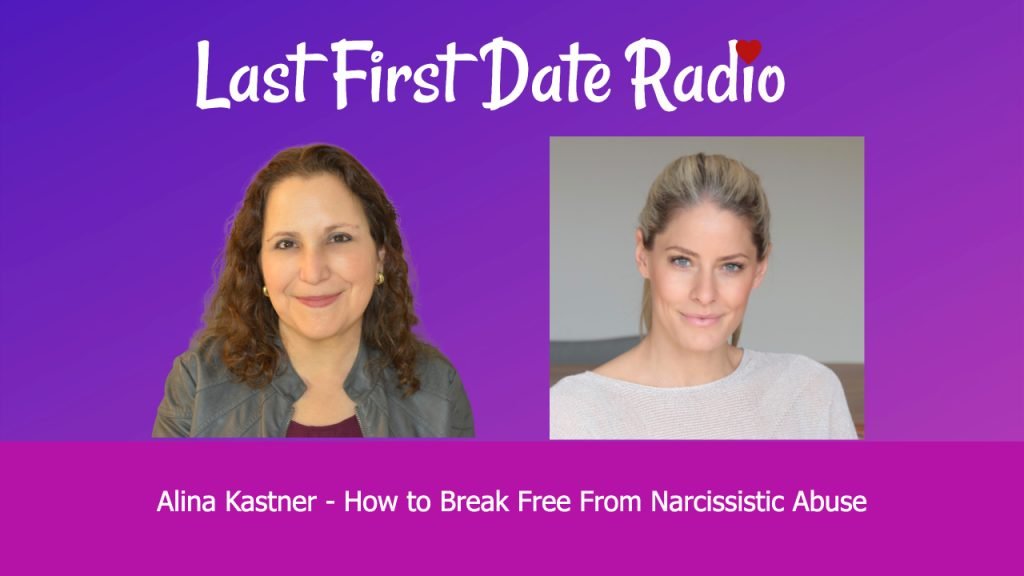
If you’ve ever experienced narcissistic abuse, this episode with Dr. Alina Kastner is for you. Learn how to break free! — How do you break free from narcissistic abuse? Dr. Alina Kastner, MSc, is a leading Vienna-based psychotherapist. Working with individuals, couples, and families across all backgrounds, she brings “bold systemic therapy with a twist” […]
If you’ve ever experienced narcissistic abuse, this episode with Dr. Alina Kastner is for you. Learn how to break free!
—
How do you break free from narcissistic abuse? Dr. Alina Kastner, MSc, is a leading Vienna-based psychotherapist. Working with individuals, couples, and families across all backgrounds, she brings “bold systemic therapy with a twist” to match her clients’ fire and courage. Her specialty: promoting deeper intimacy, connection and clarity while helping people navigate trauma and narcissistic abuse; the latter of which was the focus of her doctoral thesis.
In this episode:
What exactly is narcissistic abuse, and why it’s so difficult for people to see when they’re experiencing it
The first step to protect yourself from a narcissist
The biggest misconceptions about narcissism in the media
How to tell the difference between an emotionally unavailable partner and a true narcissist
Small acts you can take to begin rewriting your story of narcissistic abuse
EP 706: Alina Kastner – How to Break Free From Narcissistic Abuse
Highlights of this Episode
What is narcissistic abuse – common signs • Narcissistic abuse is primarily psychological: gaslighting, lack of empathy, exploitation for admiration (“supply”), envy, devaluation and discard. • Victims feel confused, anxious, walk on eggshells, and may develop PTSD/C-PTSD. • Pattern: intense love-bombing → gradual devaluation → isolation → increased confusion.
Who is vulnerable & why • People raised with narcissistic or fragmented caregiving often unconsciously seek familiar (unhealthy) attachment patterns. • Compassion toward family is different than compassion toward a romantic partner; trying to “fix” a narcissist rarely works. • Highly compassionate people can be especially susceptible.
Healing and practical self-care steps • Start small: meditation, breathwork, therapy, journaling. Break healing into manageable steps. • Invite and feel painful emotions (e.g., use the “pain hour”) rather than only intellectualizing. • Create must-haves / deal-breakers lists for relationships; be flexible on “nice-to-haves” but firm on non-negotiables.
Dating, differentiating avoidant vs narcissist, and co-parenting • Avoidant vs narcissist: avoidants can usually self-reflect and are willing to work on attachment issues; narcissists lack empathy, deflect blame, and won’t respect boundaries. • Early testing: look for consistency of actions with words over time; many red flags surface within weeks. • Dating tips: prefer profiles/actions that “show” values (not just boastful claims); listen for listening, empathy, and groundedness. • Co-parenting with a narcissist: aim for no emotional engagement; communicate facts neutrally; use lawyers if necessary; maintain modeled behavior for children.
If you’re feeling stuck in dating and relationships and would like to finally find love, sign up for a complimentary 45-minute love breakthrough session with Sandy https://lastfirstdate.com/application