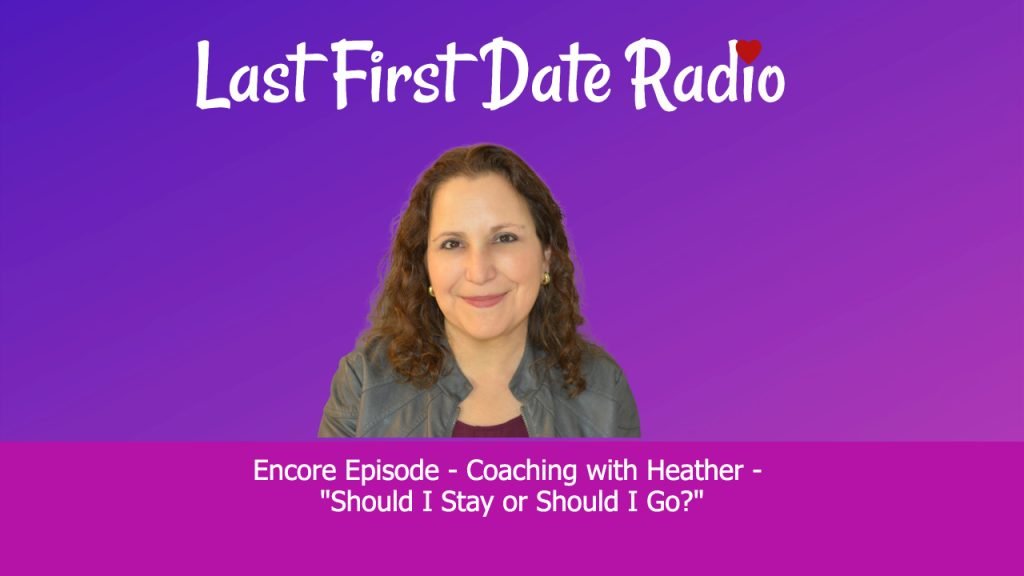
Live Coaching With Heather – How to Know When to Stay and When to Go

Listen as I coach Heather live on the podcast. She wants to know how she can figure out early on when to stay and when to go. — Heather wrote in to the podcast: “I’ve been separated and divorced for 6 years. I’ve been in therapy and have been working on myself (listening to your […]

when to stay and when to go

Listen as I coach Heather live on the podcast. She wants to know how she can figure out early on when to stay and when to go.

—

Heather wrote in to the podcast: “I’ve been separated and divorced for 6 years. I’ve been in therapy and have been working on myself (listening to your podcasts and being a woman of value) but still spent the last two years in a relationship that was on and off again. How do you quickly find out if someone is a match? Instead of spending a few years trying to figure it out.”

Listen as I coach Heather live on air on how to know…should I stay or should I go (and so much more)!

When to Stay and When to Go?

Heather has been separated for three years and divorced three years after a 13-year marriage. She discusses what she learned from her marriage that she’s bringing to the next relationship.

She began by listing all of HER faults in the marriage; she felt she was harsh and controlling and had to always be right. I noticed that she put the blame on herself, but as we continued the coaching conversation, much more was revealed.

She knew on the day of her wedding that he was the wrong man for her. But, she married him anyway. She’s not alone. This is more common than you may think.

I ask Heather why she did not trust her intuition about her ex-husband. She felt he wasn’t the right man, and she felt trapped in the relationship. Life just happened to her instead of making conscious choices in her life. Can you relate?

She saw the red flags and ignored them. We compare her marriage red flags with the red flags in her more current relationship.

Red flags in the marriage included detachment and living parallel lives. Turns out he was gay, even though he had said he was bisexual when they got married. She was his first relationship with a woman.

Both were not true to themselves and were living a lie during the marriage.

I ask Heather, “Who does your ex-husband remind you of from your family of origin?”

She says it was not her dad. Or…was it? As Heather describes their relationship, she discovers some surprising truths about the connection between her father and why she chose her husband.

Our downloaded family blueprint directly influences our choices in romantic partners.

We often pick a partner who has similar qualities to our most difficult parent. We keep hoping we can somehow ‘fix’ the relationship with that parent by fixing it in a partner who has those traits. It doesn’t work. I share with Heather what DOES work.

I show her how she puts herself down and makes excuses for bad behavior in men. I point out the difference between having compassion for others and making excuses for bad behavior. This really resonates with her. She then draws the connection between her father and the last man she dated.

How can you tell if a man has the qualities you’re looking for, and whether you should stay or go?

Heather is fuzzy about this, and I clarify the difference between an annoying behavior and a character flaw.

I walk her through an exercise to find her must-haves.

As we conclude our session, I tell Heather how she needs to guard herself from giving away too much too soon. She needs to be careful not to choose partners who have the red flags she identified.

Heather’s Homework

Notice where she’s giving parts of herself away before someone shows her they deserve her stories and her love. Lean back and observe behaviors. See if a guy steps up. Tell men what she needs to be happy in the relationship, and see if a man can provide that for her.

Can you relate to Heather’s story? How did you feel about the coaching session? Please share your thoughts in the comments below.


Please subscribe/rate and review the podcast here.

Apply to get FREE coaching on the podcast: https://bit.ly/LFDradiocoaching 

If you’re feeling stuck in dating and relationships and would like to finally find love, sign up for a complimentary 45-minute love breakthrough session with Sandy https://lastfirstdate.com/application

Join Your Last First Date on Facebook https://facebook.com/groups/yourlastfirstdate

Get a copy of Sandy’s books, Becoming a Woman of Value; How to Thrive in Life and Love and Choice Points in Dating; Empowering Women to Make Healthier Decisions in Love and Love at Last: True Stories of Falling in Love Later in Life
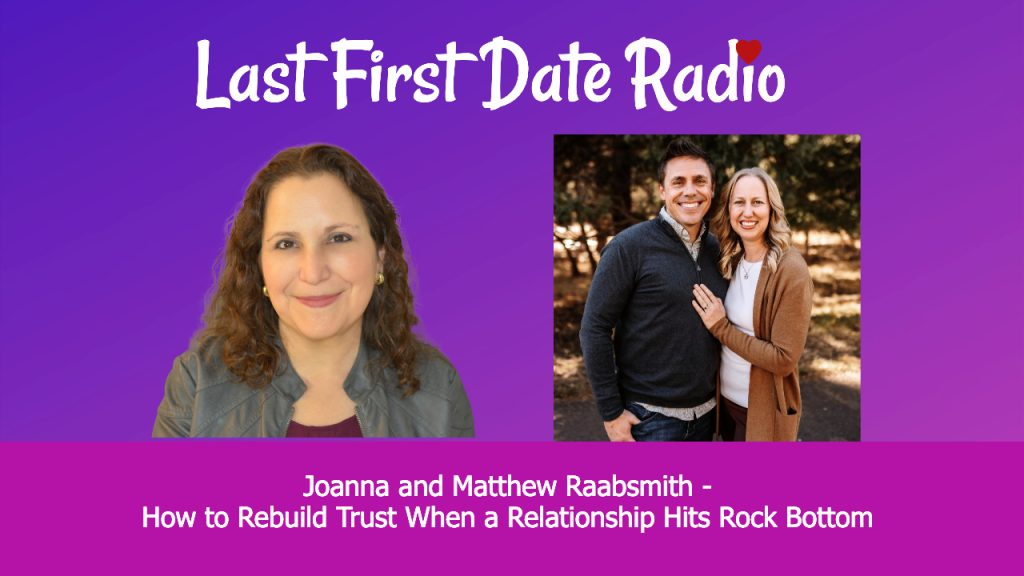
How to Rebuild Trust When a Relationship Hits Rock Bottom

How can a couple rebuild trust after betrayal or any trauma? When a relationship hits rock bottom, is there hope? Find out on this podcast. — How can you rebuild trust when a relationship has hit rock bottom? My podcast guests, Joanna and Matthew Raabsmith, have lived to tell the tale. They are sought-after relationship […]

rebuild trust

How can a couple rebuild trust after betrayal or any trauma? When a relationship hits rock bottom, is there hope? Find out on this podcast.

—

How can you rebuild trust when a relationship has hit rock bottom? My podcast guests, Joanna and Matthew Raabsmith, have lived to tell the tale. They are sought-after relationship experts, speakers, and authors who help high-achieving couples rebuild trust and create deeply connected relationships after betrayal. They co-lead The Raabsmith Team, a coaching collective offering transformative coaching, programs and community support.

In this episode:

  • How to rebuild trust and connection after infidelity or trauma when you feel hopeless
  • How couples misunderstand how to begin healing after hitting rock bottom
  • What is meaningful honesty in relationships?

EP 698: Joanna and Matthew Raabsmith – How to Rebuild Trust When a Relationship Hits Rock Bottom 

For couples who feel hopeless right now, what are some practical ways for them to start on a path back to healing, trust and connection?

We use our intimacy pyramid framework:

The bottom level is honesty. You have to get honest with yourself and with each other about your past and how you’re showing up now. It’s also about self-acceptance.

The next level is safety. There’s no safety without honesty. Each partner commits to doing something about the issues that are breaking down. Be aware of your emotional experience and work on your own regulation. 

The next level is trust. Here’s where you have goals and a shared vision to move into the hard places together. 

The next level is vulnerability, which leads to intimacy. You open up more about the more fragile parts of yourself.

What happens emotionally and relationally for couples who hit rock bottom?

There are scenarios where only one person has been doing the work, and the other partner either steps up or the relationship can end. There are other scenarios where there has been a major rupture.There needs to be repair for the relationship to be restored. Are both partners willing to show up with new levels of honesty and safety? You need awareness and responsibility.

After betrayal or deep rupture, what does meaningful honesty really look like, and what’s the difference between sharing information and rebuilding connection?

Honesty is a proactive action. You don’t wait to be asked the right question to get the right answer. You’re driven to be open and honest about destructive behaviors before getting asked. You have to be willing to be honest with yourself first. Know yourself so you can share honestly. Join groups to help you share honestly.

How can couples begin rebuilding trust when emotions are still raw?

Start with safety and stabilization to begin the healing when emotions are still raw. It’s not the time to dive into the deepest pain, but it’s important to build support and structure.

What positive outcomes have you seen emerge when couples are willing to do the deeper healing work after betrayal? 

It’s one of the greatest gifts to see the positive results of couples we’ve helped. They’ve built a lasting connection. We have a yearly retreat with couples we’ve helped. They sometimes help other couples because of the results they’ve achieved. They experience passion, purpose and play. They are breaking patterns from generations before.

What are your final words of advice for anyone who wants to go on their last first date?

Get to know yourself, who you are, your values, what you want in a relationship, and what it takes to build that. You want to find a person who will build that with you. Look for someone who is open to personal growth. 

Connect with the Raabsmiths

  • Website: raabsmithteam.com 
  • Instagram: @theraabsmithteam
  • Grab your free Couples Honest Connection Guide to help you better connect both with yourself as you grow in personal awareness and with your partner as you increase your relational closeness.

Watch this episode on YouTube


Please subscribe/rate and review the podcast here.

Apply to get FREE coaching on the podcast: https://bit.ly/LFDradiocoaching 

FREE download: “The Green Light Guide to Dating After 50: How to Show Interest Without Chasing” https://lastfirstdate.com/green-light-guide/

If you’re feeling stuck in dating and relationships and would like to finally find love, sign up for a complimentary 45-minute love breakthrough session with Sandy https://lastfirstdate.com/application

Join Your Last First Date on Facebook https://facebook.com/groups/yourlastfirstdate

Get a copy of Sandy’s books, Becoming a Woman of Value; How to Thrive in Life and Love and Choice Points in Dating; Empowering Women to Make Healthier Decisions in Love and Love at Last: True Stories of Falling in Love Later in Life

How to Overcome Limiting Beliefs and Perfectionism

If you want to overcome your limiting beliefs and perfectionism, this episode of Last First Date Radio is for you! — Do you have limiting beliefs? Are you a perfectionist? My podcast guest, Kamini Wood, is here today to speak about these topics. She is a certified life coach, speaker, and bestselling author who helps […]

overcome limiting beliefs

If you want to overcome your limiting beliefs and perfectionism, this episode of Last First Date Radio is for you!

—

Do you have limiting beliefs? Are you a perfectionist? My podcast guest, Kamini Wood, is here today to speak about these topics. She is a certified life coach, speaker, and bestselling author who helps high achievers overcome anxiety, perfectionism, and limiting beliefs to rediscover their authentic selves. As the founder of the AuthenticMe® method and CEO of Live Joy Your Way, she empowers individuals to build self-awareness, set boundaries, and create fulfilling, balanced lives.

In this episode:

  • Where do our limiting beliefs stem from?
  • How can people overcome limiting beliefs, especially when it holds them back from dating?
  • How does perfectionism sabotage our love lives, and how can people begin to overcome their need to be perfect?
  • How can our careers contribute to our self-sabotaging habits, and how does this show up in our romantic relationships?
  • How can people balance their love life and work?

EP 653: Kamini Wood – How to Overcome Limiting Beliefs and Perfectionism

Where do our limiting beliefs stem from?

I see them as narratives that come from our families of origin or experiences we’ve had throughout our lives. Some common ones are “I’m not enough” “I’m not lovable”.

How can people overcome limiting beliefs, especially when it holds them back from dating?

Naming your limiting beliefs is the first step. Get curious with yourself. Recognize the stories you’re telling yourself. If you have fear, complete the thought loop. What’s your fear? What’s true? What’s the evidence I have today to support this belief?

Once you identify the truth, ask yourself what you want to do about it. What action will you take?

How does perfectionism sabotage our love lives, and how can people begin to overcome their need to be perfect?

Perfectionism can hold us back because we might expect our partner to be perfect. We create unspoken expectations. That leads to resentment. If we hold ourselves to a high standard, we can be held back. Perfectionists struggle when a relationship is not working, and they are afraid of failure, and afraid to leave a relationship for that reason. It can keep us from being honest with what you truly need.

How can our careers contribute to our self-sabotaging habits, and how does this show up in our romantic relationships?

If you’re a perfectionist, work is a place where you get a lot of meaning and enoughness. You might put more energy into work, which can leave you drained and unable to put energy into your love life. There’s certainty in your work life, but less certainty in your love life. How can you find balance? Ask yourself what about work makes you feel safe and good? If you have a fear of rejection and not being accepted in dating, ask yourself what’s the worst case scenario your mind is telling you? Then ask yourself what you will do.

What are your final words of advice for anyone who wants to go on their last first date?

Give yourself permission to be present for the process and allow it to be what it is. Give yourself grace. Pay attention to the stories you tell yourself. Be you and be present. Just focus on making a connection.

Watch this episode on YouTube

Connect With Kamini


Please subscribe/rate and review the podcast here.

Apply to get FREE coaching on the podcast: https://bit.ly/LFDradiocoaching 

If you’re feeling stuck in dating and relationships and would like to finally find love, sign up for a complimentary 45-minute love breakthrough session with Sandy https://lastfirstdate.com/application

Join Your Last First Date on Facebook https://facebook.com/groups/yourlastfirstdate

Get a copy of Sandy’s books, Becoming a Woman of Value; How to Thrive in Life and Love and Choice Points in Dating; Empowering Women to Make Healthier Decisions in Love and Love at Last: True Stories of Falling in Love Later in Life

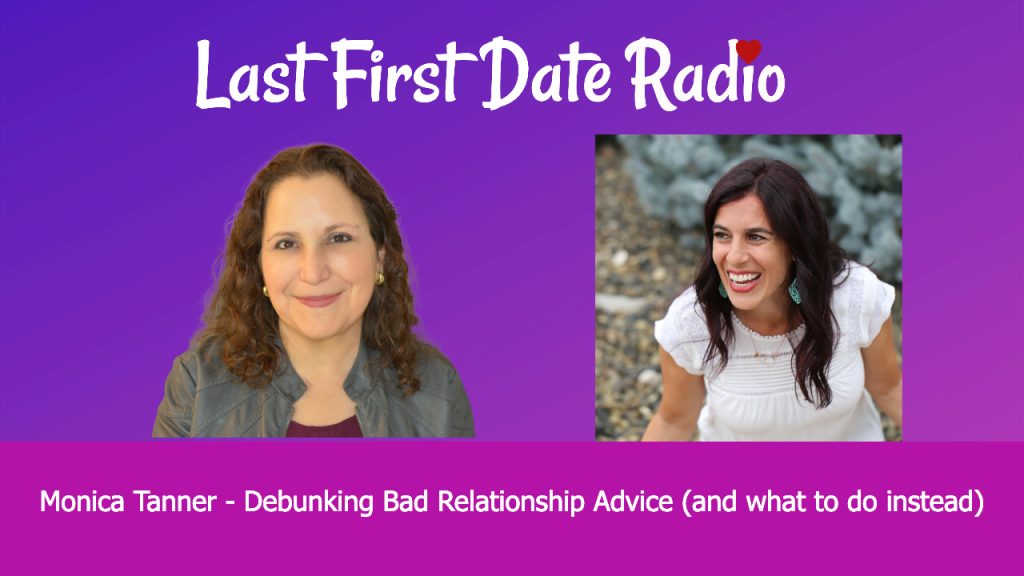
Debunking the Worst Relationship Advice (and what to do instead)

What’s the worst relationship advice you’ve ever heard? Let’s debunk that bad advice and replace it with what really works in love. — What’s the best and worst relationship advice? Find out on the podcast with Monica Tanner, a Relationship Coach and host of the Secrets of Happily Ever After podcast. She transforms marriages with […]

worst relationship advice

What’s the worst relationship advice you’ve ever heard? Let’s debunk that bad advice and replace it with what really works in love.

—

What’s the best and worst relationship advice? Find out on the podcast with Monica Tanner, a Relationship Coach and host of the Secrets of Happily Ever After podcast. She transforms marriages with simple communication, connection, conflict resolution and commitment strategies. Her mission is to lower the divorce rate and improve marital satisfaction. Through her engaging podcast, new Amazon Best-Selling book, Bad Marriage Advice, vibrant social media community, and couple’s coaching practice, Monica’s expert guidance has impacted thousands of couples, by helping them ditch resentment and roommate syndrome and get back to living their happily ever after love story.

In this episode:

  • The worst relationship advice
  • The top 3 secrets to happily ever after
  • The cure for “Roommate Syndrome”

EP 699: Monica Tanner – Debunking the Worst Relationship Advice (and what to do instead) 

What’s the worst relationship advice you’ve heard?

Don’t sweat the small stuff.Where do you think the big stuff comes from? Learn how to skillfully talk about things that are small before they get big.

Learn how to compromise.We expect more from relationships than we ever did before. Compromise is a lazy way to solve a problem where no one gets their needs met. Collaborate instead, which means get curious. What about this is important? What do I value most about this? Put it all out there and get creative with your solution. 

Don’t go to bed angry.This is vastly misunderstood. Late at night, couples often get into it, and then one person goes to sleep and the other can’t sleep because they’re falling apart. Get curious with yourself about why you’re angry. Abandonment issues? Catastrophizing. Talk about that. Come up with a solution together.

You host a podcast called the Secrets of Happily Ever After. What are the top secrets?

The secret to happily ever after is having compassionate understanding for your partner’s reality. Your partner is separate from you and sees reality differently. Can you be compassionately curious about each other’s reality? Friends first, partners second.

Why do couples fall into what you call “roommate syndrome”, and how can they stop?

Roommate syndrome is what happens when two people have been living together a long time and are living as roommates, because communication doesn’t go well after the honeymoon phase is over. We don’t have the skills on our own to communicate properly. Couples haven’t run out of things to talk about, they just don’t know how to communicate effectively. Get some skills to bring up difficult topics.

What are your final words of advice for anyone who wants to go on their last first date?

We are built for connection. We all want to find our special someone who can witness our lives. There’s nothing more important than learning the skills of connection.

Connect With Monica

Watch this episode on YouTube


Please subscribe/rate and review the podcast here.

Apply to get FREE coaching on the podcast: https://bit.ly/LFDradiocoaching 

FREE download: “The Green Light Guide to Dating After 50: How to Show Interest Without Chasing” https://lastfirstdate.com/green-light-guide/

If you’re feeling stuck in dating and relationships and would like to finally find love, sign up for a complimentary 45-minute love breakthrough session with Sandy https://lastfirstdate.com/application

Join Your Last First Date on Facebook https://facebook.com/groups/yourlastfirstdate

Get a copy of Sandy’s books, Becoming a Woman of Value; How to Thrive in Life and Love and Choice Points in Dating; Empowering Women to Make Healthier Decisions in Love and Love at Last: True Stories of Falling in Love Later in Life

How to Transform Anxious Attachment into Secure Attachment

How do you transform anxious attachment into secure attachment? My guest, Trevor Hanson, has a 5-step framework that will help you heal. — Trevor Hanson is an internationally recognized coach and therapist specializing in transforming anxious attachment into secure relationships. After overcoming his own struggles, he left Tesla to pursue his passion for healing. With […]

anxious attachment

How do you transform anxious attachment into secure attachment? My guest, Trevor Hanson, has a 5-step framework that will help you heal.

—

Trevor Hanson is an internationally recognized coach and therapist specializing in transforming anxious attachment into secure relationships. After overcoming his own struggles, he left Tesla to pursue his passion for healing. With a master’s in Marriage and Family Therapy, he’s helped thousands globally through The Art of Healing and his signature method, “The Secure-Self Journey.”

In this episode:

  • The 4 essential elements to healing anxious attachment that most people miss.
  • The key mindset shift that most people overlook when trying to become secure.
  • A look at the structured plan Trevor uses to help clients develop a secure attachment.
  • A clear direction on how to start healing.
  • A powerful approach for creating self-trust, confidence, and safety within yourself.
  • How to take the next steps in your journey to healing anxious attachment.

EP 658: Trevor Hanson – Transforming Anxious Attachment into Secure Attachment

What is anxious attachment, and how does it impact our relationships?

There are two criteria to meet to be anxiously attached. You have fear of abandonment or fear of losing connection with others. You feel love is scarce and your ex is the only one for you.The second is a lack of self-esteem. It might not be conscious.

The TEMPO cycle is something we created to show how anxious attachment impacts our relationships 

T: Trigger. Creates a fear of abandonment. 

M: Meaning. What meaning do we make out of that trigger?

E: Emotion. What do you feel?

P: Protect. In a relationship, we begin to protect ourselves by shutting down or people-pleasing.

O: Outcome. What happens in the relationship and in you?

What are the 4 essential elements to healing anxious attachment that most people miss?

  1. Recognize the inner child part of you that created people pleasing or other rules that love has to be earned. Learn how to approach, nurture, and heal that part of you. 
  2. Healing looks like
    1. Be compassionate and kind to our inner child. 
    2. Listen to the so-called truths we believe about love 
    3. Validate. Be empathic to your inner child. 
    4. Truth – Create safety and trust for your inner child.

What are the next steps to healing anxious attachment?

If your partner triggers you and you feel that they don’t care about you, recognize that your inner child is triggered. If you tend to go to protection and start judging them and pointing out their bad behavior, your partner is now triggered and might get defensive and shut down.

If you can map out what’s going on, you can interrupt the cycle. Ask yourself what you want to do at every point of the trigger. If you recognize the meaning you’re making, you can change the meaning to something else. Maybe you need to communicate with them about what you need. Maybe you need to regulate your emotions. If you’re still upset, you can ask yourself what the outcome is that you are seeking. When you know your TEMPO cycle, you have power to interrupt it.  Learn how to be vulnerable and ask for what you want from your partner. This is about co-regulation.

What are your final words of advice for anyone who wants to go on their last first date?

My last first date happened when I became secure. There’s a scene in the Barbie movie where Ken is jealous, and he feels scarcity. On the outside, he looks confident. But he was insecurely attached. When I healed and filled my own cup, I saw the women I dated less as rescuers and more as potential partners. Build your sense of security. 

Connect With Trevor

https://linktr.ee/trevorhanson

Watch this episode on Youtube


Please subscribe/rate and review the podcast here.

Apply to get FREE coaching on the podcast: https://bit.ly/LFDradiocoaching 

If you’re feeling stuck in dating and relationships and would like to finally find love, sign up for a complimentary 45-minute love breakthrough session with Sandy https://lastfirstdate.com/application

Join Your Last First Date on Facebook https://facebook.com/groups/yourlastfirstdate

Get a copy of Sandy’s books, Becoming a Woman of Value; How to Thrive in Life and Love and Choice Points in Dating; Empowering Women to Make Healthier Decisions in Love and Love at Last: True Stories of Falling in Love Later in Life
How to Increase Intimacy in Your Everyday Life

You can increase intimacy in all parts of your life. My podcast guests, Celeste and Danielle, will show you how! — Do you want to know how to increase intimacy in your life? Danielle Harel, Ph.D., and Celeste Hirschman, M.A., are co-founders of the Somatica® Institute. They revolutionized intimacy and relationship coaching with their experiential […]

increase intimacy

You can increase intimacy in all parts of your life. My podcast guests, Celeste and Danielle, will show you how!

—

Do you want to know how to increase intimacy in your life? Danielle Harel, Ph.D., and Celeste Hirschman, M.A., are co-founders of the Somatica® Institute. They revolutionized intimacy and relationship coaching with their experiential Somatica Method. They have trained over 1,000 coaches, authored three books, and inspired countless people to embrace vulnerability and rediscover desire.

In this episode:

  • How to start practicing intimacy in your daily life
  • Why it’s essential to start with non-romantic connections
  • How to step out of your comfort zone and practice intimacy with strangers
  • How couples can create chemistry, even if they don’t feel an immediate connection at first
  • Some of the first steps someone can take to actively generate more chemistry with their partner, even after years together
  • How men can shed their emotional armor and lean into vulnerability with their partners

EP 659: Danielle Harel & Celeste Hirschman – How to Increase Intimacy in Your Everyday Life

How can people start practicing intimacy in their daily lives, and why is it essential to start with non-romantic connections?

Celeste: Intimacy is first with ourselves, even the parts we’re embarrassed about. We need to connect to those parts so we can connect and accept others. We often judge others, and when we bring those pieces together, we can have better relationships with others.

Danielle: People are missing out on intimacy if they’re only thinking of it as a romantic term. Connection with all people builds your band of joy and fullness.

Celeste: There are things we’re ashamed of that won’t change. That’s what I mean by acceptance. Even when we change, things still come up, but we can deal with them in a healthier way.

Danielle: My wound is about intimacy with self, not with others. Intimacy created a way to love my body and connect more intimately with others.

How do you guide people to step out of their comfort zones and practice intimacy with strangers? 

Celeste: When I’m at the bank and ask the teller how they’re doing instead of staring at my phone, that’s intimacy. In our work, we begin with an open hearted stance to create intimacy.

Danielle: We can practice intimacy with every person in our lives. It’s powerful. The stakes are lower, so you can be more open and less defensive.

How do you help couples create chemistry, even if they don’t feel an immediate connection at first?

Danielle: Chemistry is not created with a list. Sitting present with a person and checking with what feels good is important. Are you enjoying the experience? If you’re totally not attracted, don’t keep dating, but if you’re having fun and connecting, that’s great. We can have different types of chemistry with people: intellectual, travel adventures, or sexual chemistry.

Celeste: Don’t try to make a relationship right away and be future focused. Be present and build intimacy in moments.

What are some of the first steps someone can take to actively generate more chemistry with their partner, even after years together?

Celeste: Start with the reality that sex doesn’t happen spontaneously. We don’t always have a conversation about what turns us on and whether it’s compatible. Have the conversations so you can continue to build chemistry.

Danielle: Many couples don’t even know it’s a conversation to have. It can be hard to keep a fire burning after you’ve been together for a while. Pay attention and learn tools to understand what motivates us in sex. Sex becomes a resource and not a chore.

Celeste: For example, if someone touches my face while kissing me, I feel special and turned on.

How do you help men shed their emotional armor and lean into vulnerability with their partners?

Celeste: I love working with men. A man I’m working with feels he has to manage his partner’s emotions and not let her feel fully. Other men don’t know how to express their fears and uncertainty. I help them understand their emotions and learn how to let their partners take care of their own feelings. He gets to feel his response to it.

Danielle: I’ve worked with a lot of women who feel men are supposed to know how to deal with their emotions. There are expectations that men can hold their feelings. It’s more helpful for women to express what’s going on for them and what they need from their partners when they have big emotions.

What are your final words of advice for anyone who wants to go on their last first date?

Celeste: I used to go on dates thinking I was marketing to someone else’s needs. Now, I ask myself if I’m getting what I want and need.

Danielle: Enjoy every moment. Don’t just shoot for the end. Every connection is an opportunity for more intimacy.

Website & Social Media Links:

Watch this episode on YouTube


Please subscribe/rate and review the podcast here.

Apply to get FREE coaching on the podcast: https://bit.ly/LFDradiocoaching 

If you’re feeling stuck in dating and relationships and would like to finally find love, sign up for a complimentary 45-minute love breakthrough session with Sandy https://lastfirstdate.com/application

Join Your Last First Date on Facebook https://facebook.com/groups/yourlastfirstdate

Get a copy of Sandy’s books, Becoming a Woman of Value; How to Thrive in Life and Love and Choice Points in Dating; Empowering Women to Make Healthier Decisions in Love and Love at Last: True Stories of Falling in Love Later in Life

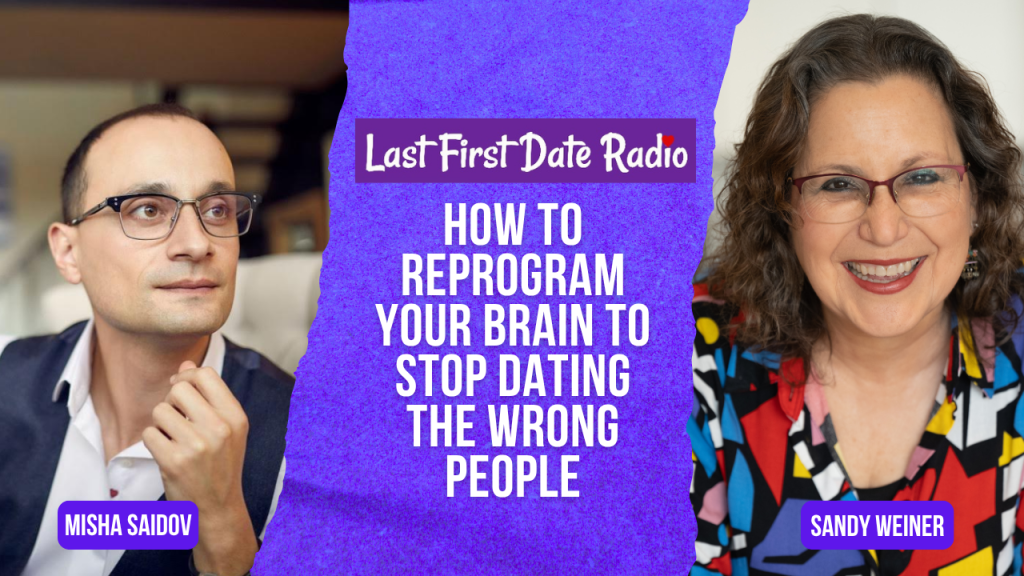
How to Reprogram Your Brain to Stop Dating the Wrong People

How do you stop dating the wrong people? My podcast guest, Misha Saidov, says you need to reprogram your brain. Here’s how! — Stop dating the wrong people! Misha Saidov is a modern philosopher, mystic, entrepreneur, and author focused on personal transformation and human potential. Founder of Institute of Metacognitive Programming, his work has reached […]

Stop Dating the Wrong People

How do you stop dating the wrong people? My podcast guest, Misha Saidov, says you need to reprogram your brain. Here’s how!

—

Stop dating the wrong people! Misha Saidov is a modern philosopher, mystic, entrepreneur, and author focused on personal transformation and human potential. Founder of Institute of Metacognitive Programming, his work has reached 150,000+ people in 93 countries. Blending trauma healing, identity, and meaning with business rigor from roles at Konica Minolta and Phenom People, he helps people break inherited patterns and live with greater clarity, intention, and authenticity.

In this episode:

  • Why so many of us keep dating the wrong people
  • What people get wrong about chemistry
  • What is Metacognitive Programming and how does it help people retrain their brains?
  • Why self-awareness is not enough to create lasting change

EP 724: Misha Saidov- How to Reprogram Your Brain to Stop Dating the Wrong People

Highlights of this episode:

Repetition compulsion & attachment patterns

  • Misha framed repeated relationship choices as “repetition compulsion” (Freud): repeating unresolved childhood patterns hoping they will finally resolve.
  • Childhood experiences create metaprograms (e.g., abandonment, emotional deprivation) that shape expectations and interpretations of relationships.
  • People both perceive reality through these metaprograms and actively recreate situations that confirm them (e.g., withholding feelings, pushing partners away).
  • Attachment styles (anxious, avoidant, fearful-avoidant) drive automatic reactions that persist despite intellectual awareness.

Five-step process to rewire relationships (Misha’s framework)

  • Step 1 — Seeing through (awareness): identify unmet needs, attachment style, metaprograms, and default personality settings.
  • Step 2 — Hearing beyond words (recognition & pause): use behavioral chain analysis to notice triggers, thoughts, feelings, actions, and outcomes in real time.
  • Step 3 — Sincere path (authentic disclosure): verbally own inauthentic reactions and shame; explain origins (e.g., childhood) to partners and request cooperation.
  • Step 4 — Go till the end (deep healing): do the hard inner-child/shadow work; address trauma fully to avoid recurring symptoms and intergenerational transmission.
  • Step 5 — Product of your product (agency & effectiveness): measure progress by satisfaction and getting needs met; aim for life effectiveness rather than just transient happiness.

Dating, relationships, and parenting implications

  • Dating is a practical training ground and mirror for emotional health; people attract partners at their current level of resolution.
  • No mistakes mindset: early relationships help improve pattern recognition speed (from years → months → days).
  • Partners should support healing but not substitute for personal therapy; avoid making your partner your therapist or vice versa.
  • Practical relationship guidance: aim for a partner who meets ~80% of your needs; keep 20% for self-regulation and realistic boundaries.
  • Parenting impact: healing stops generational trauma (“ghost in the nursery” vs. “angel in the nursery”); working on oneself benefits children and descendants.
  • Maintain the “first date” feeling by continually re-engaging with your partner—relationships are ongoing conversations.

Watch this episode on YouTube here:

Connect With Misha Saidov


Please subscribe/rate and review the podcast here.

Send me your dating dilemmas to be featured in an upcoming episode: https://tinyurl.com/datingdilemma

If you’re feeling stuck in dating and relationships and would like to finally find love, apply for a complimentary 30-minute love breakthrough session with Sandy https://lastfirstdate.com/application

Join Your Last First Date on Facebook https://facebook.com/groups/yourlastfirstdate

Get a copy of Sandy’s books, Becoming a Woman of Value; How to Thrive in Life and Love and Choice Points in Dating; Empowering Women to Make Healthier Decisions in Love and Love at Last: True Stories of Falling in Love Later in Life

How to Stop Sabotaging Your Romantic Relationships

Do you tend to sabotage romantic relationships without knowing why? Tune into this episode to learn how to find next level love! — Many of us sabotage romantic relationships. If that sounds familiar, this episode is for you! My podcast guest, Junie Moon, is the CEO of Midlife Love Out Loud. She’s a Love Mentor, […]

romantic relationships

Do you tend to sabotage romantic relationships without knowing why? Tune into this episode to learn how to find next level love!

—

Many of us sabotage romantic relationships. If that sounds familiar, this episode is for you! My podcast guest, Junie Moon, is the CEO of Midlife Love Out Loud. She’s a Love Mentor, best-selling author, women’s empowerment leader, and certified Shadow Work® Coach. Junie’s mission is to help women experience Next Level Love by first nurturing the love within themselves. She’s the author of “Loving The Whole Package: Shed The Shame and Live Life Out Loud”, and an award winning speaker and host of the successful Midlife Love Out Loud podcast. 

In this episode of Last First Date Radio:

  • Common signs that someone is unconsciously self-sabotaging in their relationships
  • What ‘the shadow side’ of love is, and how it affects our ability to form healthy relationships
  • How the inner critic contribute to self-sabotage, and strategies to quiet it
  • The first step someone can take when they recognize they are sabotaging their relationships
  • How shadow work transforms your love life and helps you build healthier, more fulfilling relationships

EP 636: Junie Moon – Why We Sabotage Romantic Relationships (and How To Stop)

What are some common signs that someone is unconsciously self-sabotaging in their relationships?

We date the same person over and over with a different face. What was safe and acceptable as a child is not healthy in relationships. People pleasers are afraid to speak up. Women in general put men’s sexuality first so they don’t take up too much time and space. They’re afraid if they’re vulnerable, they might get left. If you’ve been in an emotionally or physically abusive relationship, that kind of energy from childhood equals love. Conflict avoidance is another strategy that doesn’t work in relationships. As long as we’re putting up masks, we’re coming to relationships not fully being who you are.

Can you explain what ‘the shadow side’ of love is, and how it affects our ability to form healthy relationships?

The shadow is the part of us we want to hide. We learn how to fit in, not disappoint people, and how to survive at a young age. We get messages about how to be ‘good’. We’re taught to hide certain parts that are seen as ‘not good’. We threw those parts in shadow. As adults, that’s not effective. Shadow work shines a light on the places we lost access to. That’s how we show up more authentically and attract in the right people. 

How does the inner critic contribute to sabotaging romantic relationships, and what are some strategies to quiet it?

The inner critic is a part that is the risk manager. It assesses if we’re safe or not. We need that part, and the more we’ve been hurt, the more it shows up. It tells you there’s something wrong with you. Why bother? It’s not going to happen for you. Who will want me? 

However, if you want partnership and connection, you need to reel in the inner critic and quiet it. Notice what’s going on in your body when you’re on the first date. The inner critic wants you to stay safe, so let the risk manager know it’s overshooting. Thank it for protecting you. Tell it it’s making you feel inadequate. Be in the driver’s seat, so when the pattern comes up, let it know it’s not working for you anymore.

What is the first step someone can take when they recognize they are sabotaging their relationships?

Celebrate that you’re aware you have a pattern. If you don’t see it, you can’t fix it. Have compassion for yourself. Go back as far as you can remember and see where the pattern began. Look at your childhood and notice the pattern you’re trying to heal. What might you want differently?

What are your final words of advice for anyone who wants to go on their last first date?

Know thyself! If you want great love and are willing to heal and be honest with yourself, you’re more likely to go on your last first date. Do the work to attract the relationship you really want.

Watch this episode on youtube

Connect With Junie


Please subscribe/rate and review the podcast here.

Apply to get FREE coaching on the podcast: https://bit.ly/LFDradiocoaching 

If you’re feeling stuck in dating and relationships and would like to finally find love, sign up for a complimentary 45-minute love breakthrough session with Sandy https://lastfirstdate.com/application

Join Your Last First Date on Facebook https://facebook.com/groups/yourlastfirstdate

Get a copy of Sandy’s books, Becoming a Woman of Value; How to Thrive in Life and Love and Choice Points in Dating; Empowering Women to Make Healthier Decisions in Love and Love at Last: True Stories of Falling in Love Later in Life

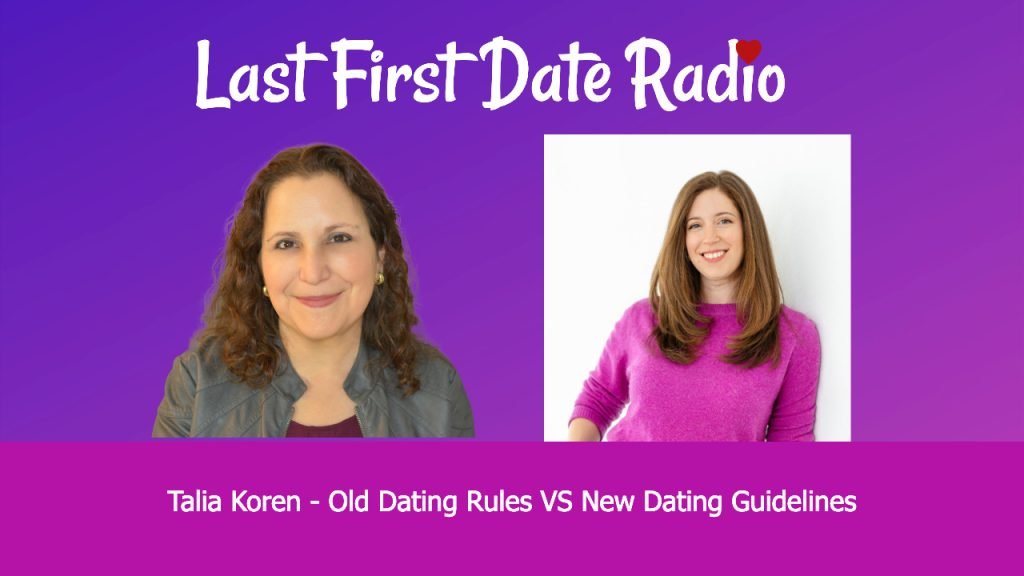
Dating Advice: Old Dating Rules vs. New Dating Guidelines

Out with the old dating rules, and in with new dating guidelines and principles. Tune in to Last First Date Radio to hear Talia Koren! — Why should we dump the old dating rules? Talia Koren is a dating podcaster, content creator, and entrepreneur who went on 64 first dates in under 10 months before […]

dating rules

Out with the old dating rules, and in with new dating guidelines and principles. Tune in to Last First Date Radio to hear Talia Koren!

—

Why should we dump the old dating rules? Talia Koren is a dating podcaster, content creator, and entrepreneur who went on 64 first dates in under 10 months before meeting her husband on Hinge. Now, as the founder of Dating Intentionally, she helps women in their 30s–50s date with purpose, build real connections, and enjoy the process.

In this episode:

  • The old rules of dating and why they don’t work anymore
  • The new dating guidelines
  • How to get out of old dating programming
  • Why people today are afraid of commitment and vulnerability
  • What to do when someone says they’re ready for commitment but aren’t

EP 709: Talia Koren – Old Dating Rules vs. New Dating Guidelines

Highlights of this Episode

Main theme: Old dating rules vs. new guidelines

  • Old “rules” (e.g., waiting three days, three-date sex rule) are games/manipulation.
  • Reframe dating as games vs. boundaries vs. standards.
  • Recommendation: ditch manipulative games; use clear boundaries and healthy standards.

Practical dating guidelines

  • Slow dating: align actions with goals, reflect after dates, sit with discomfort.
  • Show clear interest (don’t hide feelings); be direct about communication preferences.
  • Women encouraged to make first moves; both partners should share initiative by “turning towards” each other.
  • First dates should be low-commitment (coffee/walk) as a vibe check.
  • Focus reflections on values, how you felt, and reciprocity — not superficial markers (car, degree).
  • Ask targeted, personal questions related to your needs (e.g., career, travel) to evaluate fit.
  • If actions don’t match stated intentions (e.g., says wants a relationship but is inconsistent), move on.

Personal experiences/examples

  • Talia: 64 first dates in 10 months, then met husband outside her “type”; attraction developed slowly; prized slow burn, reciprocity, and lack of red flags.
  • Examples of dealbreakers: physical boundary violations (unwanted grabbing), stalking/over-researching, Venmo-for-sex behavior.

Watch on YouTube

Connect With Talia


Please subscribe/rate and review the podcast here.

Apply to get FREE coaching on the podcast: https://bit.ly/LFDradiocoaching 

FREE download: “The Green Light Guide to Dating After 50: How to Show Interest Without Chasing” https://lastfirstdate.com/green-light-guide/

If you’re feeling stuck in dating and relationships and would like to finally find love, sign up for a complimentary 45-minute love breakthrough session with Sandy https://lastfirstdate.com/application

Join Your Last First Date on Facebook https://facebook.com/groups/yourlastfirstdate

Get a copy of Sandy’s books, Becoming a Woman of Value; How to Thrive in Life and Love and Choice Points in Dating; Empowering Women to Make Healthier Decisions in Love and Love at Last: True Stories of Falling in Love Later in Life

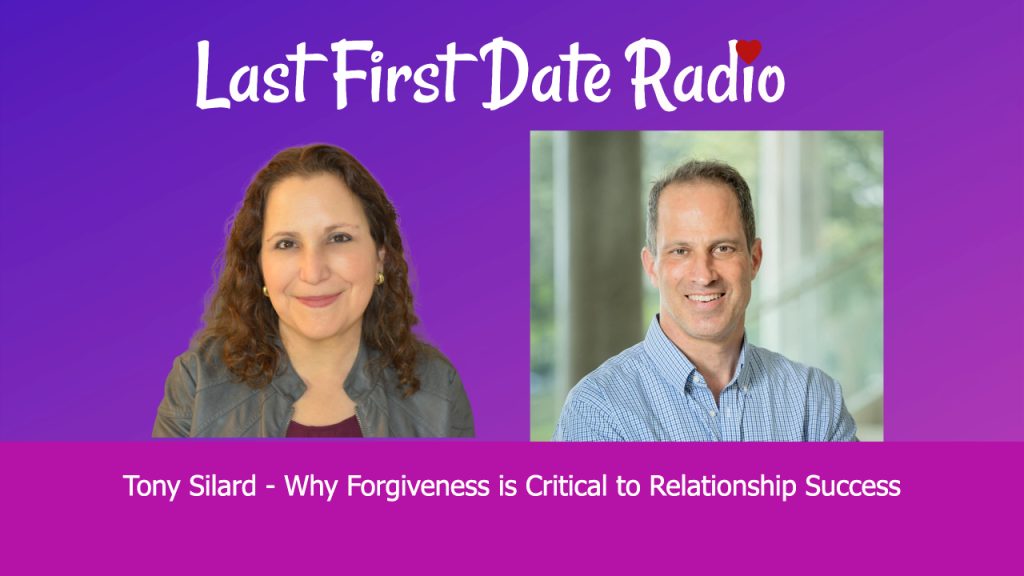
Why Is Forgiveness Critical to Relationship Success?

What is forgiveness, and why is it so important to relationship success? Find out in this episode with Leadership guru Dr. Tony Silard. — What is the importance of forgiving yourself and past partners? My podcast guest, Tony Silard, says that many relationships fail because we don’t practice forgiveness. He’s the author of Love and […]

forgiveness

What is forgiveness, and why is it so important to relationship success? Find out in this episode with Leadership guru Dr. Tony Silard.

—

What is the importance of forgiving yourself and past partners? My podcast guest, Tony Silard, says that many relationships fail because we don’t practice forgiveness. He’s the author of Love and Suffering, and has coached political leaders, and he has lectured on leadership at Harvard, Stanford, Georgetown, the University of California at Berkeley, George Washington University, Cal Poly Pomona, and ESADE Business School. 

In this episode of Last First Date Radio:

  • Why Forgiveness is critical to a successful relationship
  • How not forgiving past relationships hinders our relationships
  • How not forgiving creates a never ending cycle
  • The first step in forgiving
  • Why you must judge to forgive

Tony Silard – Why Forgiveness is Critical to Relationship Success

Why is forgiveness critical to a successful relationship?

Forgiveness is to “give for”. We all have people we need to forgive. What’s the other option? Resentment. To feel anger again and again paralyzes us. I had a physically abusive stepfather, and it took me a long time to forgive him. I had low self esteem and was resentful because of the abuse. It was paralyzing me. Anger can be internalized and manifest in unhealthy ways. Or it becomes aggression where we mistreat others. I did both. Eventually, I was able to have compassion for the parts of him that were good and let go of the anger. I was able to let the better parts of him give for the worst parts and let the positive parts come forward. It helps us heal suffering and move towards love.

What is the first step in forgiving?

In my book, I write about the Love Progression Model, which has four plateaus that culminate in love: Acceptance, forgiveness, gratitude, and love. Each has an obstacle we have to overcome in order to achieve it. In order to realize acceptance, we have to overcome suffering. In order to realize forgiveness, we have to overcome resentment. In order to realize gratitude, we have to overcome judgment. In order to realize love, we have to overcome incarceration.

What I mean by that is we often judge the person who created the hardship, and try to move as far away from that person as possible. I blamed my mother for divorcing my father and marrying my abusive stepfather. I blamed her for being unstable. So, I gravitated towards stability and peace. Running towards the opposite, I thought I needed to date stable women. It wasn’t rooted in my values. So, I would get bored, and then I’d date someone wild, and that didn’t work. We replay the drama we don’t heal. We are imprisoned by our faulty thinking, hoping they rectify the past. Whatever you judge, you already are or will become. 

You mention you must judge to forgive. What do you mean by that?

Judgment comes first and then forgiveness. You’re judging someone’s actions as wrong. It can also be a power play. We can move beyond forgiveness to gratitude. If I hadn’t gone through so much suffering, I wouldn’t have healed and connected to others who have suffered. Passion means pati = to suffer. I felt powerless growing up, but now my passion is to help others feel powerful. 

Post-traumatic growth helps us learn from our trauma. It shifts our priorities, and the trauma becomes a fuel.

What are your final words of advice for anyone who wants to go on their last first date?

If you want to meet the right person, you first have to become the right person. If you haven’t worked through past traumas, you will continue to meet the same type of person. It’s not what he drives, it’s how he drives you. It’s not what she looks like, but how she looks at you!

Watch this episode on YouTube

Connect With Tony


Please subscribe/rate and review the podcast here.

Apply to get FREE coaching on the podcast: https://bit.ly/LFDradiocoaching 

If you’re feeling stuck in dating and relationships and would like to finally find love, sign up for a complimentary 45-minute love breakthrough session with Sandy https://lastfirstdate.com/application

Join Your Last First Date on Facebook https://facebook.com/groups/yourlastfirstdate

Get a copy of Sandy’s books, Becoming a Woman of Value; How to Thrive in Life and Love and Choice Points in Dating; Empowering Women to Make Healthier Decisions in Love and Love at Last: True Stories of Falling in Love Later in Life