Why Hope Might Be the Real Secret to Lasting Love

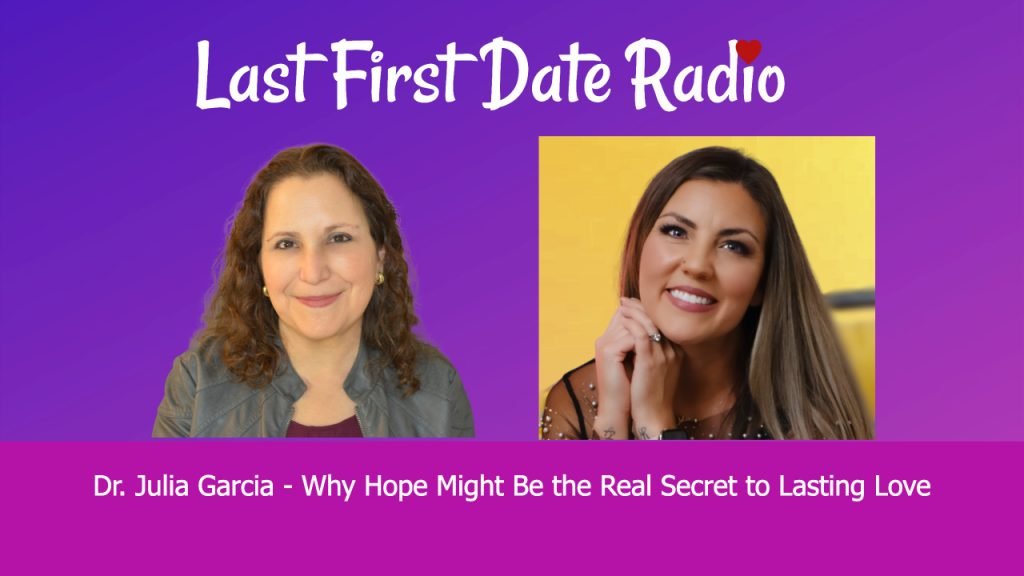
What’s the real secret to lasting love? My podcast guest, Dr. Julia Garcia, has a hunch it might be something that surprises you… — What’s the real secret to lasting love? My podcast guest, Dr. Julia Garcia, is a psychologist, author, and renowned speaker dedicated to empowering people through the science of mental health. She […]

secret to lasting love

What’s the real secret to lasting love? My podcast guest, Dr. Julia Garcia, has a hunch it might be something that surprises you…

—

What’s the real secret to lasting love? My podcast guest, Dr. Julia Garcia, is a psychologist, author, and renowned speaker dedicated to empowering people through the science of mental health. She weaves her real, lived experiences with behavioral science to create practical, transformative strategies for lasting change. Whether through her TEDx presentations, her interactive workshops, or her book The 5 Habits of Hope, Dr. Garcia’s mission remains the same: to prove that hope isn’t just something you feel—it’s something you practice, one habit at a time.

In this episode of Last First Date Radio:

  • The secret to lasting love
  • Why people struggle to hold onto hope in romantic relationships
  • The 5 Habits of Hope
  • Feeling Detours, and how they show up in our lives
  • How to train yourself to have more hope

EP 692: Dr. Julia Garcia – Why Hope Might Be the Real Secret to Lasting Love

What inspired you to write this book?

I was inspired by people I’ve met all over the world. I built a crisis hotline during the pandemic, and I’ve been inundated by how many people say they’re hopeless. There’s got to be a process back to hope. I’m honoring all the stories I’ve heard. Hope is the fuel to keep us motivated and keep going.

Why do you think so many people struggle to hold onto hope, especially when it comes to their romantic relationships?

When we feel hopeless, our brain shuts down. When we have tools to feel feelings we don’t like to feel, we can break the cycles that are not helping us. “Maybe” is a special word that can help create hope. It’s a moment of interruption. Maybe I am deserving of love. Hope is the greatest predictor of health.

You introduce The 5 Habits of Hope: Reflect, Risk, Release, Receive, and Repurpose. Can you walk us through how these habits work in practice?

  1. Reflect: Pause long enough to feel what we feel in the present. What’s something I’ve struggled with?
  2. Risk: Emotional risks can be difficult for some people. You might think you’re not worth the risk to open up. You’re not a burden. People care. Be more vulnerable.
  3. Release: This is one of the hardest. We’re so hard on ourselves and don’t give us permission to breathe. Maybe it’s writing. Maybe it’s meditating.
  4. Receive: If you don’t think you’re worthy, it will be hard to receive. You have the capacity to love and receive love. Receive love from friends.
  5. Repurpose: See worth where you may have seen waste or felt discarded or disregarded. It’s what we do with the feelings that matter.

In your book, you talk about “feeling detours.” What are they, and how do they show up in our everyday lives?

Feeling detours are about dismissing, denying, being divisive about your feelings. If we don’t feel, we don’t deal, and we can’t heal. Practice the five habits. Identify why you’re feeling what you’re feeling. 

If someone listening feels hopeless right now, what’s the very first step they can take today to begin building hope again?

If you’re listening, it’s a powerful step. It took me many years to have words and language. Be passionate, not perfect, be present. And remind yourself…maybe. Maybe I can love again. Maybe I can enjoy this date no matter the outcome. 

Watch this episode on YouTube

Connect with Dr. Julia


Please subscribe/rate and review the podcast here.

Apply to get FREE coaching on the podcast: https://bit.ly/LFDradiocoaching 

If you’re feeling stuck in dating and relationships and would like to finally find love, sign up for a complimentary 45-minute love breakthrough session with Sandy https://lastfirstdate.com/application

Join Your Last First Date on Facebook https://facebook.com/groups/yourlastfirstdate

Get a copy of Sandy’s books, Becoming a Woman of Value; How to Thrive in Life and Love and Choice Points in Dating; Empowering Women to Make Healthier Decisions in Love and Love at Last: True Stories of Falling in Love Later in Life
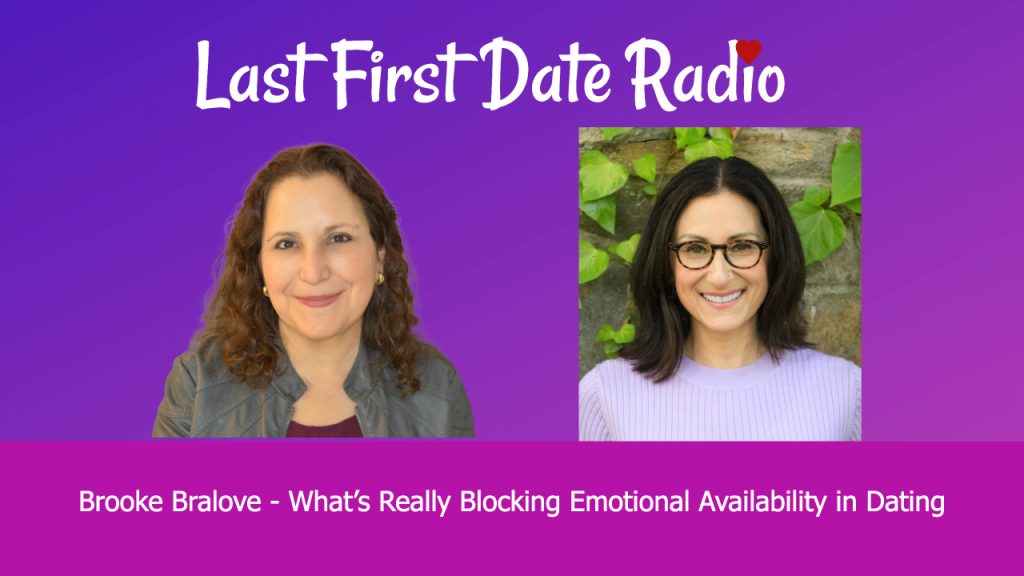
How to Become More Emotionally Available in Dating

How do you become more emotionally available in dating? In this episode, we discuss some simple steps you can take today. — How do you become more emotionally available in dating? My podcast guest, Brooke Bralove, has the answers! She is a Psychotherapist, Certified Sex Therapist, and Master Accelerated Resolution Therapy Practitioner. She helps women […]

emotionally available

How do you become more emotionally available in dating? In this episode, we discuss some simple steps you can take today.

—

How do you become more emotionally available in dating? My podcast guest, Brooke Bralove, has the answers! She is a Psychotherapist, Certified Sex Therapist, and Master Accelerated Resolution Therapy Practitioner. She helps women and men let go of perfectionism and move toward greater authenticity, joy, pleasure, and connection. She has been in private practice in Bethesda, MD for over 20 years.

In this episode:

  • What is ART (Accelerated Resolution Therapy) and how does it work in relationships?
  • What are some common emotional blocks people carry into dating, and how do they show up?
  • How can past experiences or trauma impact someone’s ability to connect emotionally with a partner?
  • What are practical steps or exercises listeners can try to become more emotionally available?

EP 696: Brooke Bralove – How to Become More Emotionally Available in Dating

Can you explain what ART (Accelerated Resolution Therapy) is and how it works in relationships?

ART is a treatment modality created in 2008 to take distressing images or feeling states and change how the brain stores them. It’s through bilateral eye movements, gestalt therapies, and image replacement.

What are some common emotional blocks people carry into dating, and how do they show up?

The three most common blocks are betrayal, feelings of not good enough, and rejection. I learned about ART after a terrible breakup. I did so many different therapies, and I was completely stuck. Someone told me about ART, and after two sessions, I felt neutral about the breakup instead of stuck. 

It works by taking the incident (learning your partner had an affair) that is playing over and over, you process it in your mind instead of talking about it, and you work through it like a scene in a movie. Paired with eye movements, you replace those images with positive images. Your body moves from having negative sensations to positive ones.

How can past experiences or trauma impact someone’s ability to connect emotionally with a partner?

We become emotionally dysregulated when we feel unsafe due to past trauma. You can’t form connections when you’re dysregulated. We have many tools for emotional regulation, such as self-run eye movements and EFT tapping. There are youtube videos with vagus nerve exercises to reset your system. We heal in safe connection. 

What are practical steps or exercises listeners can try to become more emotionally available?

Learn how to tell when your body is regulated. We need to teach ourselves what safe love feels like. Challenge your relationship to vulnerability. It’s a skill we can learn by practicing it, because we need it for deep connection, to be seen and known for who we are and be loved for our authentic selves.

What are your final words of advice for anyone who wants to go on their last first date?

Don’t dim your light or contort yourself to be liked. Find your inner spark and shine it. Learn how to regulate your nervous system. Be vulnerable. Stop following the same old patterns, and begin to feel good in your body. 

Watch this episode on YouTube

Connect With Brooke


Please subscribe/rate and review the podcast here.

Apply to get FREE coaching on the podcast: https://bit.ly/LFDradiocoaching 

FREE download: “The Green Light Guide to Dating After 50: How to Show Interest Without Chasing” https://lastfirstdate.com/green-light-guide/

If you’re feeling stuck in dating and relationships and would like to finally find love, sign up for a complimentary 45-minute love breakthrough session with Sandy https://lastfirstdate.com/application

Join Your Last First Date on Facebook https://facebook.com/groups/yourlastfirstdate

Get a copy of Sandy’s books, Becoming a Woman of Value; How to Thrive in Life and Love and Choice Points in Dating; Empowering Women to Make Healthier Decisions in Love and Love at Last: True Stories of Falling in Love Later in Life

Stop Second-Guessing Yourself in Dating: 5 Ways to Build Confidence

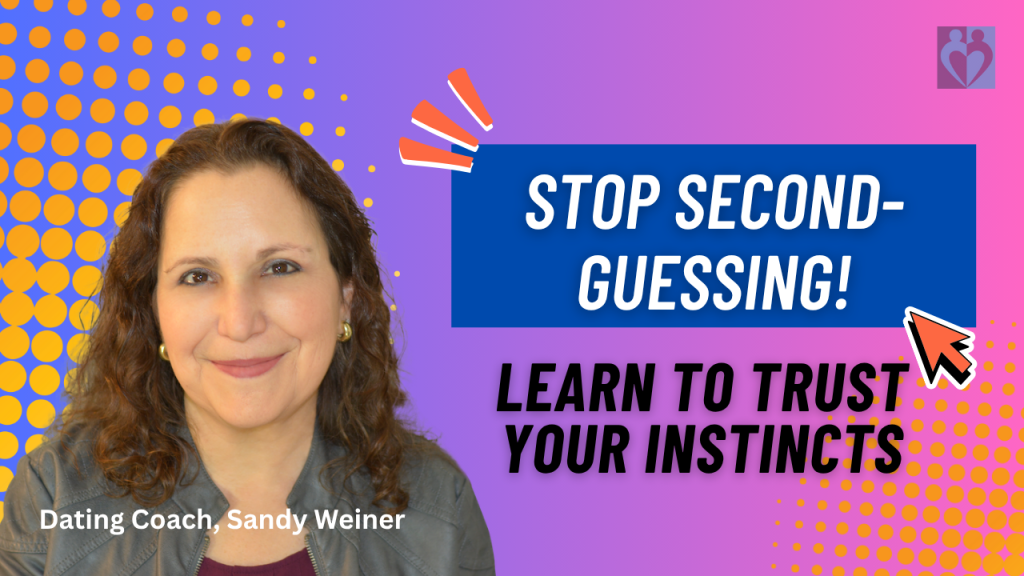
If you’ve been second guessing yourself in dating, these tips will help you learn to trust your instincts and build confidence! — If you’ve ever walked away from a date replaying every word you said, wondering if you should’ve done something differently—you’re not alone. Dating can bring up a lot of self-doubt, but second-guessing yourself […]

second-guessing

If you’ve been second guessing yourself in dating, these tips will help you learn to trust your instincts and build confidence!

—

If you’ve ever walked away from a date replaying every word you said, wondering if you should’ve done something differently—you’re not alone. Dating can bring up a lot of self-doubt, but second-guessing yourself only keeps you stuck.

The truth? You don’t need to be perfect. You just need to trust yourself. Here’s how to stop overthinking and start dating with confidence.

5 Ways to Stop Second-Guessing and Build Confidence

1. Recognize and Acknowledge Your Thoughts

The first step is noticing when you’re spinning in circles. Pay attention to those “What if?” or “Maybe I shouldn’t have…” thoughts. Then ask yourself: Am I afraid of making a mistake, or am I just being hard on myself? Awareness is powerful—it helps you separate real concerns from unnecessary self-criticism.

2. Challenge Negative Thoughts

Your brain loves to tell stories that aren’t true. Question those assumptions. Is there actual evidence, or are you just filling in the blanks? And remember—there’s no such thing as “perfect” in dating. Be kind to yourself. When you catch your mind spiraling, gently shift your focus to something positive or productive.

3. Trust Your Intuition

Your gut is wiser than you think. Start small: trust yourself with everyday choices, and you’ll build confidence for the bigger ones—like who to date and when to walk away. And once you make a decision, stop analyzing it to death. Assume you made the best choice you could in that moment, and move forward.

4. Learn from Your Experiences

Dating is a learning curve. Instead of beating yourself up over past choices, reflect on what you can take away from them. Growth matters more than perfection. Every experience—good or bad—is practice for building the love life you want.

5. Seek Support

You don’t have to do this alone. Talk to friends who remind you of your worth. If you’re feeling stuck, therapy or coaching can give you tools to quiet the self-doubt. And mindfulness? Total game-changer. It helps you see your thoughts without getting tangled up in them.

Second-guessing yourself won’t get you closer to love—but self-trust will. Every time you choose to back yourself instead of doubting yourself, you’re building the kind of confidence that attracts the right people. So take a deep breath, trust your gut, and remember: the right person won’t require you to question yourself—they’ll make you feel sure.


If you’re feeling stuck in dating and relationships and would like to finally find your person, sign up for a complimentary 45-minute love breakthrough session with Sandy https://lastfirstdate.com/application

Join Your Last First Date on Facebook https://facebook.com/groups/yourlastfirstdate

Get Sandy’s books, Becoming a Woman of Value; How to Thrive in Life and Love and Choice Points in Dating; Empowering Women to Make Healthier Decisions in Love and Love at Last: True Stories of Falling in Love Later in Life
Why We Fall For People We Can’t Have

Many of us fall for people we can’t have. In this episode, you’ll learn why we do that, and how we can start falling for people we CAN have. — Have you ever fallen for someone who was in a relationship, married, lived too far away — someone who was not available for a relationship? […]

people we can't have

Many of us fall for people we can’t have. In this episode, you’ll learn why we do that, and how we can start falling for people we CAN have.

—

Have you ever fallen for someone who was in a relationship, married, lived too far away — someone who was not available for a relationship? Listen to this episode with my son, Max, and learn why we fall for people we can’t have.

EP 677: Why We Fall For People We Can’t Have

Why We Fall For People We Can’t Have

  • We perceive what we can’t have as having more value
  • We like the challenge of trying to chase what we can’t get
  • We have self esteem or trust issues
  • We have fear of commitment
  • We didn’t expect things to be like this because they gave us all the right signals
  • We convinced ourselves this person was our only or best option

How to avoid falling for people you can’t have

  • Stop believing it’s the only person you can have
  • Get the confidence and social skills to meet people anywhere
  • Open up all your options, so you stop focusing on people who are not available

Watch this episode on YouTube

Have you ever fallen for someone you couldn’t have? Please share your story below.


Please subscribe/rate and review the podcast here.

Apply to get FREE coaching on the podcast: https://bit.ly/LFDradiocoaching 

If you’re feeling stuck in dating and relationships and would like to finally find love, sign up for a complimentary 45-minute love breakthrough session with Sandy https://lastfirstdate.com/application

Join Your Last First Date on Facebook https://facebook.com/groups/yourlastfirstdate

Get a copy of Sandy’s books, Becoming a Woman of Value; How to Thrive in Life and Love and Choice Points in Dating; Empowering Women to Make Healthier Decisions in Love and Love at Last: True Stories of Falling in Love Later in Life

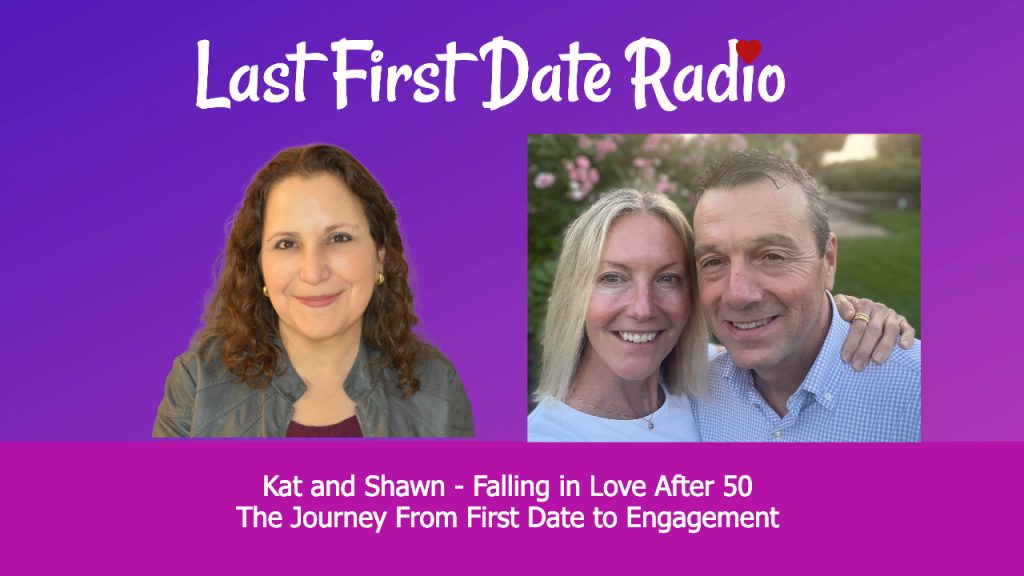
Love After 50: From First Date to Engagement

How do you become more emotionally available in dating? In this episode, we discuss some simple steps you can take today. — Listen to the story of Kat and Shawn, a couple who met in their mid-50s. I worked with Kat before, during, and after she met Shawn, and they are a living example of […]

love after 50

How do you become more emotionally available in dating? In this episode, we discuss some simple steps you can take today.

—

Listen to the story of Kat and Shawn, a couple who met in their mid-50s. I worked with Kat before, during, and after she met Shawn, and they are a living example of how to find love after 50 and make the relationship work. They are engaged, living together, and navigating every up and down that comes with relationships later in life.

In this episode:

  • What makes a relationship after 50 work well
  • How to design healthy partnership
  • Obstacles that come up in relationships and how to work through them
  • How to know if they’re the right one for you

EP 697: Kat and Shawn – Falling in Love After 50, The Journey From First Date to Engagement

From Kat and Shawn

“We met online in our mid-50s, and the chemistry and compatibility were amazing from the start. We both value good communication and personal and relational growth. When we find ourselves at a crossroads, it’s extremely helpful to work with Sandy. She’s able to hear and understand BOTH our perspectives and helps us consider alternative ways of seeing our challenges. She gives us the tools to continue to build a healthier relationship.

We return to these new insights frequently and appreciate how much better our relationship is with the addition of an expert. She recently helped us overcome a big issue that was keeping us stuck. Later that day, on August 5th we got engaged! We’re grateful for a relationship that feels secure, loving, and supportive.”

Kat and Shawn

Highlights from the podcast

Tell us a little about your past relationships before you two met.

Kat: Divorced twice, running a business, raising two kids. Took a long time off of dating until kids were in college. Used to date guys who shared common interests. Hired me to be more intentional

Shawn: Divorced seven years, dated on and off. Stopped dating a bit before meeting Katherine. Didn’t have a high level of self-awareness or a partner with similar values before meeting Kat.

How did you meet?

Kat: I reached out to Shawn on Match and met for coffee. We were together for ten minutes, then met for a walk the next day. There was chemistry right away, and I had to intentionally slow things down. 

Shawn: We had communicated for about a week before meeting, and there was instant chemistry when we met. I loved her humor. So I asked her out again for the next day.

How have you designed your partnership?

We have calendars and schedules. We are our favorite people to be with, but we also make sure to have time outside of the house on our own. We have a travel calendar for travel together and apart. We try to balance all of that. We talk about finances and long range goals.

What are some of the obstacles you’ve faced, and how have you overcome them?

Kat: Slowing down has helped us create a strong foundation to overcome obstacles.

The first disharmony was when I was in Africa for three weeks. It brought up insecure feelings in Shawn. Our insecurities are at the heart of every roadblock.

Shawn: Saying you have insecurity is much different from feeling it. We prioritize honesty above all things. And we agree that omissions are dishonesty. We own our insecurities. We first look at ourselves and ask if it’s something from our past or our triggers.

How has your relationship evolved over the past two years?

Kat: We repair quickly. We try to talk things out as soon as possible. We pray together daily. One of us is always showing up for the other. We have a white couch that we call our therapy couch where we talk everything out. We even created a breakup plan so we have guardrails on our relationship and will seek out three therapy sessions before making a decision to break up. 

Blending our finances was challenging. I come from fear/scarcity and Shawn comes from an abundance mindset. I had to challenge childhood beliefs and communicate my fears to Shawn. We both have our teams for support which sometimes is more helpful than speaking to each other.

Shawn: I speak to other men who are committed to their partners, men who will call me out on my BS and be very honest with me.

What are your final words of advice for anyone who wants to go on their last first date?

Kat: What worked great for us was to take things really slow physically. I had a schedule about what was and wasn’t allowed, so the chemistry wouldn’t cloud my judgment. 

Shawn: Early on, rigorous and deliberate honesty. Share things that you’re not proud of about yourself. Find a reason to be as honest as possible. It’s one of the most important things you can do. I learned so much about her when I was brave and shared with her.

Watch this episode on YouTube


Please subscribe/rate and review the podcast here.

Apply to get FREE coaching on the podcast: https://bit.ly/LFDradiocoaching 

FREE download: “The Green Light Guide to Dating After 50: How to Show Interest Without Chasing” https://lastfirstdate.com/green-light-guide/

If you’re feeling stuck in dating and relationships and would like to finally find love, sign up for a complimentary 45-minute love breakthrough session with Sandy https://lastfirstdate.com/application

Join Your Last First Date on Facebook https://facebook.com/groups/yourlastfirstdate

Get a copy of Sandy’s books, Becoming a Woman of Value; How to Thrive in Life and Love and Choice Points in Dating; Empowering Women to Make Healthier Decisions in Love and Love at Last: True Stories of Falling in Love Later in Life
Seven Words That Can Change Your Life

Jerry Giordano wrote a book about seven words that can change your life. Find out what they are in this episode of Last First Date Radio! — Did you know that seven words can change your life? Jerry Giordano is an award-winning advertising copywriter/Creative Director working and living in NYC, Chicago, Los Angeles, Austin and […]

change your life

Jerry Giordano wrote a book about seven words that can change your life. Find out what they are in this episode of Last First Date Radio!

—

Did you know that seven words can change your life? Jerry Giordano is an award-winning advertising copywriter/Creative Director working and living in NYC, Chicago, Los Angeles, Austin and Dallas. He is a co-producer of TEDx events, penned four screenplays, studied comedy at Chicago’s Second City, and performed sketch comedy in NYC and LA. He collects old cameras, photographs manhole covers, is a JFK assassination nut, meditates, and lives in the moment. He’s also the author of Your 7 Words to a Happier You; unlock the story sabotaging your relationships. 

In this episode:

  • What is “Your 7 Words to a Happier You” about?
  • What does “unlock the story sabotaging your relationships” mean?
  • What the discovery of the 7-word sabotaging story done for relationships 
  • What the 7 words have to do with getting into one dysfunctional or narcissistic relationship after another

EP 660: Jerry Giordano – Seven Words That Can Change Your Life

What is your new book, “Your 7 Words to a Happier You” about? 

I didn’t set out to write a book. I had been a hopeful romantic my whole life. In 2017, I was engaged to a woman who I thought was the love of my life. I had two failed marriages before I met her. My mom passed away and twelve days later, I got a breakup email from my fiancè. I was devastated and depressed. It was the lowest point of my life. I couldn’t stop crying – all the pent up feelings were coming out.

I started meditating successfully. That began to transform me. There were three meditations that helped me connect the dots of my life. The seven words came through and helped me through. It helped me turn my life around.

The three meditations were dots that needed to be connected.

One was three year old Jerry crying saying he couldn’t carry this anymore. Adult Jerry walks by and helps him.

I realized three year old me was upset, so I researched inner child and what happens at three. It’s the magic age. They start understanding cause and effect. They live in magic-think, dressing up as characters. Three year-old me was carrying something. What was it? What was he feeling? My mom had a baby when I was three, and I got less attention. I began to feel what he was feeling.

The seven words are a circle: 

The third word is the persona that we carry into the world, the mask. Mine was likable. That’s how I got attention. The sixth word is the sabotage word. I became subordinate to be likable. The seventh word is cycle. I repeated the pattern over and over. 

Please explain the subtitle of the book, “unlock the story sabotaging your relationships”.

The mask we show the world is sabotaging us. For me, it was “subordinate” so I didn’t rock the boat. Some sabotage words are run, rescue, hide, accommodate, shut down, become stoic. 

What has the discovery of your 7-word sabotaging story done for your relationships? 

Once I figured out the patterns of self-sabotage and made the unconscious conscious, I began to heal. I would catch myself falling back into those patterns and pull myself out of it. I was on a date, and I thought it was going well. She finished her drink and walked away without saying a word. The old Jerry would have blamed myself. New Jerry followed her to the valet. She said, “Are you stalking me?” I told the valet what happened and told her she was one of the rudest people I’d ever met. That was huge for me. That turned things around for me. I’m now in a seven year relationship with an incredible woman!

You talk about people getting into one dysfunctional or narcissistic relationship after another. What do your 7 words have to do with that?

Rescue, subordinate, likeable are words that attract narcissists. When you recognize those words and who you are, you can break the pattern and attraction to narcissists.

What are your final words of advice for anyone who wants to go on their last first date?

Figure out who you are first. Then, you put the unconscious story to rest and your dating life will change for the better.

Connect with Jerry

Watch this episode on YouTube


Please subscribe/rate and review the podcast here.

Apply to get FREE coaching on the podcast: https://bit.ly/LFDradiocoaching 

If you’re feeling stuck in dating and relationships and would like to finally find love, sign up for a complimentary 45-minute love breakthrough session with Sandy https://lastfirstdate.com/application

Join Your Last First Date on Facebook https://facebook.com/groups/yourlastfirstdate

Get a copy of Sandy’s books, Becoming a Woman of Value; How to Thrive in Life and Love and Choice Points in Dating; Empowering Women to Make Healthier Decisions in Love and Love at Last: True Stories of Falling in Love Later in Life

How to Heal Your Relationship

If you want to know heal your relationship, listen to this episode. Dr. Rachel Glik shares helpful tips to strengthen any relationship. — Rachel Glik is a licensed professional counselor with 30+ years as a couples and individual therapist in private practice. Since 2014, she has been a regular feature on the Fox 2 AM […]

heal your relationship

If you want to know heal your relationship, listen to this episode. Dr. Rachel Glik shares helpful tips to strengthen any relationship.

—

Rachel Glik is a licensed professional counselor with 30+ years as a couples and individual therapist in private practice. Since 2014, she has been a regular feature on the Fox 2 AM show in St. Louis as a relationship and mental health expert. Her book, A SOULFUL MARRIAGE: Healing Your Relationship With Responsibility, Growth, Priority, and Purpose was published February 4, 2025.

In this episode of Last First Date Radio:

  • The essential four pillars that can positively transform and heal your relationship
  • The eight friendships that can influence a relationship 
  • How to diffuse tension in an emotional argument using the love seat listening method 
  • Why we should reframe conflict as an opportunity for growth
  • One step someone could take today to create a stronger relationship

EP 646 : Dr. Rachel Glik – How to Heal Your Relationship

What are the essential four pillars that can positively transform and heal your relationship? 

  1. Pillar one: Responsibility. We’re each responsible for our happiness and well-being. We have to know ourselves and individuate.
  2. Pillar two: Growth. Most people struggle with the growth pillar. That’s where conflict comes in. We use our friction to grow individually and then together.
  3. Pillar three: Priority. We make each other the most important person in our lives besides ourselves. Nothing will come between our connection.
  4. Pillar four: Purpose. If we don’t have a sense that we make the world better through our bond, it’s a challenge. Extend out of your collective.

What are the essential eight friendships that can influence a relationship? 

  1. Emotional friendship. Your partner is a confidant. You trust them. They are attuned and you feel safe with them.
  2. Sexual and physical friendship. The physical is touching and holding hands. Sexual is how well you’re matched.
  3. Parenting friendship. Kids or pets – are you aligned?
  4. Financial friendship. Are there secrets? Lies? Is there a ‘we’?
  5. Recreational friendship. Do you have fun together, laugh, enjoy each other.
  6. Spiritual friendship. Share a similar mindset and view or support each other’s view.
  7. Domestic friendship. Do you do well as roommates? Does it feel democratic or harmonious?
  8. Community friendship. Part of an organization? Do you volunteer?

How do you diffuse tension in an emotional argument using the love seat listening method? 

It’s the opposite of the hot seat. When couples argue, we need to slow it down and take turns. One person is in the love seat. You listen and they talk. It’s structured and keeps the ego and reactive part of us at bay. Each person feels heard. Reflect back with active listening skills. Conflict is an opportunity to grow.

What is one step someone could take today to create a stronger relationship?

Show appreciation to someone who’s important to you. Pause, breathe, relax and open your heart to the experience of them in your life. 

What are your final words of advice for anyone who wants to go on their last first date?

Unless it’s really not good for you, allow yourself to embrace the imperfection of the relationship. Look out for where you’re searching for someone to complete you or be perfect. If there’s enough there and you feel you can grow together, normalize that every relationship has imperfections. 

Watch this episode on YouTube

Connect With Rachel


Please subscribe/rate and review the podcast here.

Apply to get FREE coaching on the podcast: https://bit.ly/LFDradiocoaching 

If you’re feeling stuck in dating and relationships and would like to finally find love, sign up for a complimentary 45-minute love breakthrough session with Sandy https://lastfirstdate.com/application

Join Your Last First Date on Facebook https://facebook.com/groups/yourlastfirstdate

Get a copy of Sandy’s books, Becoming a Woman of Value; How to Thrive in Life and Love and Choice Points in Dating; Empowering Women to Make Healthier Decisions in Love and Love at Last: True Stories of Falling in Love Later in Life
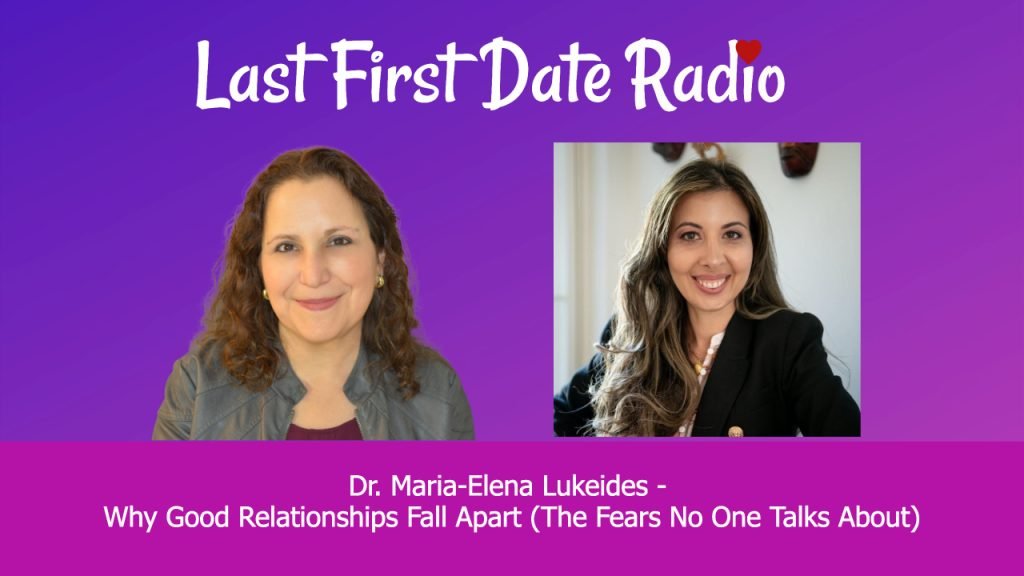
The Fears that Sabotage Relationships

What are the fears that sabotage relationships? Dr. Maria-Elena Lukeides helps us explore why good relationships fall apart. — What are the three key fears that sabotage relationships? That was the topic of discussion with Dr. Maria-Elena Lukeides. She is a Sydney-based Clinical Psychologist, meditation teacher, and pioneer in psychedelic-assisted therapy in Australia. With nearly […]

fears that sabotage relationships

What are the fears that sabotage relationships? Dr. Maria-Elena Lukeides helps us explore why good relationships fall apart.

—

What are the three key fears that sabotage relationships? That was the topic of discussion with Dr. Maria-Elena Lukeides. She is a Sydney-based Clinical Psychologist, meditation teacher, and pioneer in psychedelic-assisted therapy in Australia. With nearly 30 years in mental health, she integrates clinical psychology, neuroscience, mindfulness, and psychedelic therapy to explore trauma, healing, and human connection, drawing from both professional expertise and lived experience.

In this episode, we covered:

  • The three key fears that hold us back in life and love
  • What happens in relationships when people are unaware of the fears they carry
  • How to begin to overcome our fears and have better relationships with ourselves and others

EP 716: Dr. Maria-Elena Lukeides – The Fears That Sabotage Relationships

Highlights of this episode

Dr. Lukeides’ background & her core message

  • Central theme: The “Field of love” is a state of safety and fearlessness; fear = anything that pulls us out of that field.
  • Her key insight from personal experience: seeking external validation never fully heals inner wounds; self-love (unconditional acceptance of all parts of ourselves) is distinct from self-esteem (conditional, comparative).
  • Book coming out end of 2026: “No Parts Left Behind” with an emphasis on Internal Family Systems / parts work and reintegrating exiled parts.

Three core fear categories that sabotage relationships

  • Fear of weakness/vulnerability (survival/health): belief “I can’t cope” leads to avoidance of emotionally demanding growth.
  • Fear of incompetence/failure (skills/intellect): impostor syndrome, fear of criticism, avoidance of situations that risk perceived failure.
  • Fear of rejection/undesirability (social/attachment): early attachment wounds create expectations of exclusion and filter current interactions negatively.
  • All three originate from early experiences and form predictive “algorithms” that skew interpretation; healing requires re-examining our original conclusions.

Practical strategies for dating, boundaries, and relationship repair

  • Name and dialogue with our fears: anthropomorphize fears/parts. Ask what they are trying to protect you from.
  • Gentle, experimental exposure: “dance” of incremental self-disclosure (step forward, mirror, step back) rather than full neutralization of defenses.
  • Use self-compassion/parts work: bring exiled or shameful parts into a nonjudgmental “field of love.”
  • Go needs-first: articulate needs and boundaries early on in dating; sharing hurts and preferences is data, not aggression.
  • Test capacity early: small boundary checks (interrupting politely, asking for plans, noting treatment of waitstaff) reveal partner reliability.
  • Practical first-date tips: treat dating as play; use active/shared activities (museums, walks) to observe behavior; debrief post-date on curiosity, attraction, and reciprocity.
  • Stop compensating: avoid over-planning/paying/doing everything; lean back to see who can step up.

Watch on YouTube

Connect With Dr. Maria


Please subscribe/rate and review the podcast here.

Submit your dating dilemma to be answered on my podcast https://tinyurl.com/datingdilemma 

If you’re feeling stuck in dating and relationships and would like to finally find love, sign up for a complimentary 45-minute love breakthrough session with Sandy https://lastfirstdate.com/application

Join Your Last First Date on Facebook https://facebook.com/groups/yourlastfirstdate

Get a copy of Sandy’s books, Becoming a Woman of Value; How to Thrive in Life and Love and Choice Points in Dating; Empowering Women to Make Healthier Decisions in Love and Love at Last: True Stories of Falling in Love Later in Life

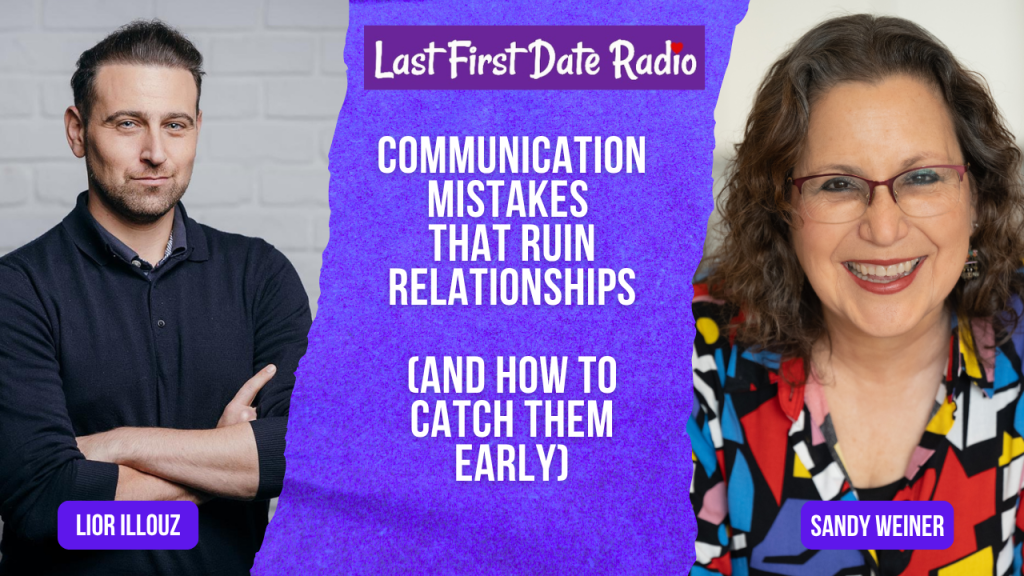
Communication Mistakes that Ruin Relationships (and how to catch them early)

Did you know that small communication mistakes are quietly ruining your relationship? Here’s how to prevent that from happening. — What are the communication mistakes that ruin relationships? Lior Illouz is the co-founder and CEO of Bonds, a PhD-backed AI relationship app with 10,000+ users, built with his childhood friend, clinical psychologist Dr. Lior Kritzman. […]

communication mistakes

Did you know that small communication mistakes are quietly ruining your relationship? Here’s how to prevent that from happening.

—

What are the communication mistakes that ruin relationships? Lior Illouz is the co-founder and CEO of Bonds, a PhD-backed AI relationship app with 10,000+ users, built with his childhood friend, clinical psychologist Dr. Lior Kritzman. A former Meta leader, husband who married at 38, and first-time father, Lior helps people catch the small communication patterns that quietly end relationships before they explode.

In this episode:

  • The small communication mistakes that can quietly end relationships
  • The gap between what we say and what we mean and why it grows over time
  • What predicts whether a relationship will last
  • How to spot your communication patterns early on in dating

EP 723: Lior Illouz – Communication Mistakes that Ruin Relationships (and how to catch them early)

Highlights of this episode:

Origins of Bonds app

  • Lior Illouz built Bonds from personal need after repeated short relationships and difficulty finding affordable, actionable help.
  • App goal: translate psychological principles into tailored, actionable daily habits and conversation practice to change behavior (not just provide generic advice).
  • Foundation: collaboration with psychologists and relationship experts; focus on measurable value (behavior change) over time spent in-app.

Common communication issues & practical fixes

  • Money disagreements
    • Root cause often fear or learned family narratives.
    • Effective approach: acknowledge fear, state needs, explain the “why,” and co-create solutions (e.g., softer goals vs. strict budgets depending on partner).
  • Not being heard / criticism vs. feedback
    • People often conflate judgment with feelings; reframe as specific requests/feedback and ask curiosity-driven questions.
    • Small, focused requests work better than overwhelming lists.
  • Emotional shut-down / defensiveness
    • Create safety: state positive intention, keep requests tiny, offer options to pause/resume conversation.
    • If the partner shuts down, gently name the observation in a nonaccusatory way (e.g., “It seems like this feels overwhelming; do you want to continue later?”).
  • Practical rehearsal
    • Role-play and simulated conversations help prepare and reduce robotic or unempathetic delivery.
    • Lior shared his own app practice: using simulated scripts improved a sensitive post-birth gift conversation.

AI, apps, and therapy: benefits & caveats

  • Benefits
    • AI/apps can give tailored reminders, conversational simulations, and habit-building nudges that scale therapy-like practices.
    • Real-world examples: users reported improved empathy with service workers and a partner moved to tears by a personalized handwritten-note gift idea prompted by the app.
  • Caveats
    • Generic LLMs can reinforce bias and lack nuance; output quality depends on input context and user honesty.
    • Trust and privacy matter: users need assurance their data won’t be sold or misused.
    • Best outcomes when apps are built with expert oversight (psychologists) and grounded in established frameworks (CBT, attachment theory, congruence/perceptual-gap work, love languages).

Watch this episode on YouTube here:

Connect With Lior and HeyBonds


Please subscribe/rate and review the podcast here.

Send me your dating dilemmas to be featured in an upcoming episode: https://tinyurl.com/datingdilemma

If you’re feeling stuck in dating and relationships and would like to finally find love, apply for a complimentary 30-minute love breakthrough session with Sandy https://lastfirstdate.com/application

Join Your Last First Date on Facebook https://facebook.com/groups/yourlastfirstdate

Get a copy of Sandy’s books, Becoming a Woman of Value; How to Thrive in Life and Love and Choice Points in Dating; Empowering Women to Make Healthier Decisions in Love and Love at Last: True Stories of Falling in Love Later in Life

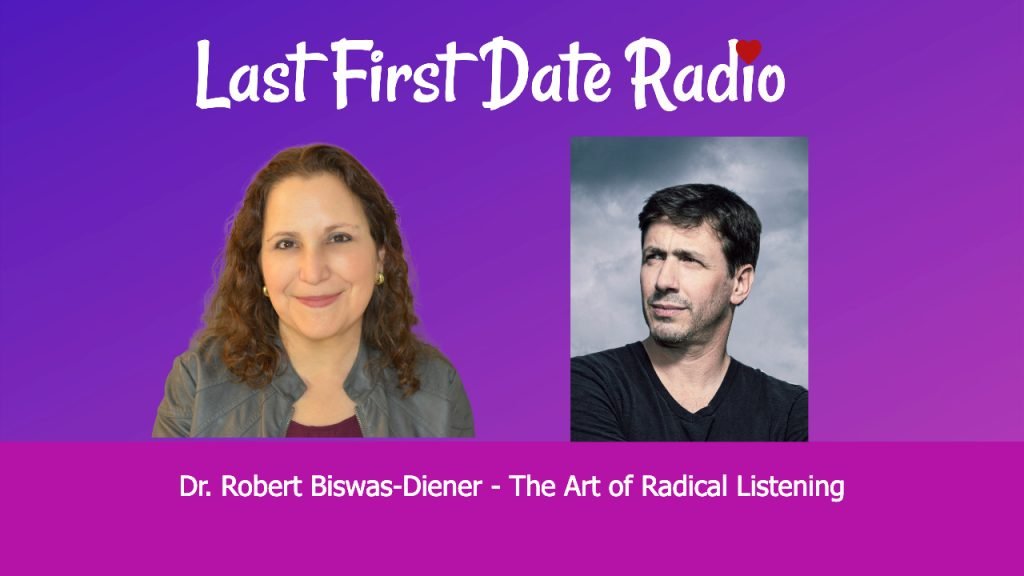
The Art of Radical Listening

What is radical listening? And how can it help improve all our relationships? My podcast guest, Robert Biswas-Diener has the answers! — What is radical listening, and why is it important in our relationships? Dr. Robert Biswas-Diener is the co-author of the soon-to-be published book, Radical Listening, The Art of True Connection. He’s a researcher, […]

radical listening

What is radical listening? And how can it help improve all our relationships? My podcast guest, Robert Biswas-Diener has the answers!

—

What is radical listening, and why is it important in our relationships? Dr. Robert Biswas-Diener is the co-author of the soon-to-be published book, Radical Listening, The Art of True Connection. He’s a researcher, author, and consultant. His previous books include The Upside of Your Dark Side (New York Times Bestseller, 2014), and the 2007 PROSE Award winner, Happiness. He has presented keynotes to Lululemon, Deloitte, Humana, AARP, The World Bank, and others. In 2024, Thinkers50 named him one of the “50 Most Influential Executive Coaches in the World.” He lives in Portland, Oregon, where he enjoys drawing and rock climbing.

In this episode:

  • How Radical Listening moves beyond traditional active listening techniques
  • What people trying to accomplish when they listen
  • How the 6 Core skills of Radical Listening enable us to better communicate with
  • others
  • How Internal and External listening skills complement each other
  • How we can effectively overcome those barriers to better approach our conversations

EP 651: Dr. Robert Biswas-Diener – The Art of Radical Listening

How does Radical Listening move beyond traditional active listening techniques? 

Radical listening is not shocking, it’s about extending listening beyond what we do in active listening. One of the things we think is most important is that listening is about accomplishing things.

What are people trying to accomplish when they listen?

They’re trying to figure out your intention: do you want to be validated or solve problems? Both parties are equal in the relationship. When the speaker is speaking, they’re making bids to entertain, connect, etc. Your job as the listener is to try to figure out what they want from you. Do they want empathy, support, or something else? We often miss what others want.

To learn what people want, we ask open questions to invite more information.There are better and worse questions. You want to ask questions that reveal something about the person – their feelings, or who they are. “What’s your take on that?”

How do the 6 Core skills of Radical Listening help us communicate better with others?

The overarching thing to do is listen with positive intent and to understand the other person better. The first three core skills are internal and the next three are external. 

The six skills are:

  1. Noticing 
  2. Quieting your inner chatter
  3. Acceptance: even without similarities, try to accept the other person’s point of view
  4. Acknowledging: say something about what you’ve noticed
  5. Questioning: asking open questions
  6. Interrupting: You can either take turns talking, or you can jump in with a ‘wow’ or ‘me too’, which are interruptions which return the focus on the speaker.

What are two obstacles to radical listening?

Comparing and competing are two obstacles to listening well. Competing would look like trying to outdo the other person. Comparing is a cousin to that. For example, you share that you studied abroad. And the other person says, “I studied abroad, too! Here’s what my experience was like.” It’s disconnecting.

How can we effectively overcome those barriers to better approach our conversations?

Any time you’re listening with intention, knowing what you want to accomplish, you’re more likely to hear the emotional tone, the themes of what you’re saying. And if you’re the speaker, be clear about what you’re looking for.

What are your final words of advice for anyone who wants to go on their last first date?

Begin with a positive intention – listen with respect and ask great questions to learn about someone, and also be willing to give of yourself. Think about the times you were deeply listened to – how did it feel? Go do that!

Connect with Robert

Watch on YouTube


Please subscribe/rate and review the podcast here.

Apply to get FREE coaching on the podcast: https://bit.ly/LFDradiocoaching 

If you’re feeling stuck in dating and relationships and would like to finally find love, sign up for a complimentary 45-minute love breakthrough session with Sandy https://lastfirstdate.com/application

Join Your Last First Date on Facebook https://facebook.com/groups/yourlastfirstdate

Get a copy of Sandy’s books, Becoming a Woman of Value; How to Thrive in Life and Love and Choice Points in Dating; Empowering Women to Make Healthier Decisions in Love and Love at Last: True Stories of Falling in Love Later in Life